
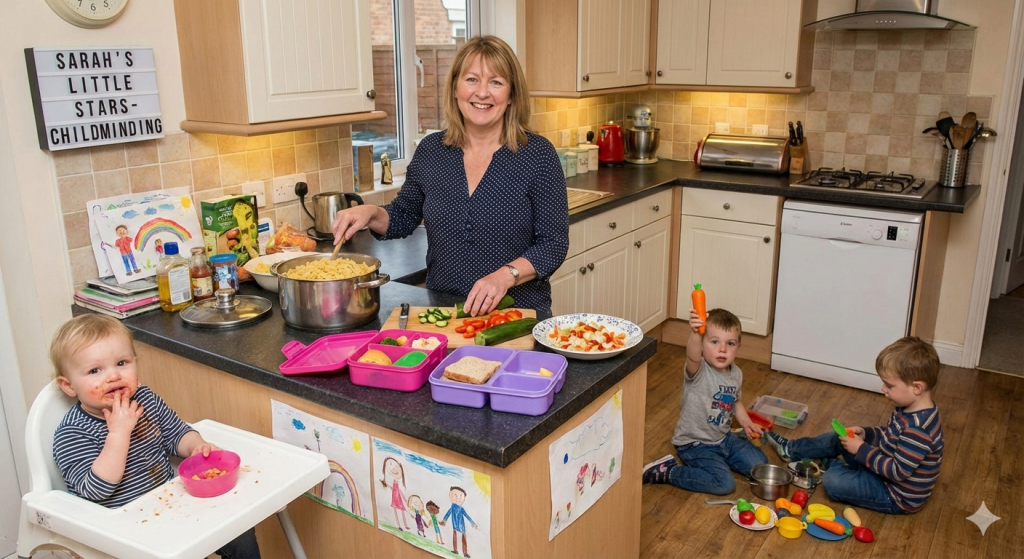
1. Understanding the EYFS Requirement for Healthy Eating
The EYFS statutory framework is clear: children must be provided with healthy meals, snacks, and drinks. Ofsted inspectors look for evidence that you are not only feeding children well but also teaching them about the importance of a healthy lifestyle.
The “Three Pillars” of Childminder Food Provision:
- Nutritional Balance: Ensuring meals include a variety of food groups—starchy carbohydrates, protein, dairy, and plenty of fruit and vegetables.
- Food Safety: Maintaining high standards of hygiene, including correct food storage and allergen management.
- Independence: Using mealtimes to develop fine motor skills (using cutlery) and social skills (sitting together at a table).
Managing the costs of these meals is a vital part of your business overheads. Ensure you are tracking every grocery receipt by following our budgeting guidance in this article.
2. Strategies for Budget-Friendly Childminder Meals
Keeping childminder costs down requires a shift from “convenience shopping” to “strategic planning.” Here are four ways to save money without compromising on quality:
A. Batch Cooking and The Freezer is Your Friend
Cooking for three or four children is often more expensive than cooking for six or eight. Whenever you make a child-friendly meal like Bolognese, mild curry, or vegetable soup, double the portion and freeze it. This reduces waste and ensures you have a healthy “ready meal” on days when the Childminder School Run is particularly chaotic.
B. Seasonal and Frozen Vegetables
Fresh berries in winter are expensive and often lack flavour. Frozen vegetables and fruits are just as nutritious (sometimes more so, as they are frozen at the source) and significantly cheaper. A bag of frozen peas or mixed berries can last a week and be added to almost any meal.
C. Meat-Free Mondays (and Wednesdays!)
Protein is often the most expensive part of a childminder food menu. Incorporating plant-based proteins like lentils, chickpeas, and beans is not only budget-friendly but also helps children explore different textures and flavours. Lentil dahl or “three-bean chili” are consistently popular with toddlers.
D. The Power of the Slow Cooker
A slow cooker allows you to use cheaper cuts of meat that become tender over several hours. It also means your “Implementation” of the meal happens in the morning, leaving your afternoons free for EYFS activities.
3. Sample 5-Day Childminder Menu (EYFS Compliant)
This menu is designed to be low-prep, high-nutrition, and budget-friendly.
| Day | Breakfast | Lunch (Hot or Cold) | Afternoon Snack | Dinner (if applicable) |
|---|---|---|---|---|
| Mon | Porridge with mashed banana | Wholemeal pitta pockets with hummus & cucumber | Apple slices with a small cube of cheese | Mild chickpea and vegetable curry with rice |
| Tue | Weetabix with semi-skimmed milk | Jacket potato with tuna and sweetcorn | Carrot sticks and breadsticks | Spaghetti Bolognese (hidden veg sauce) |
| Wed | Toasted wholemeal muffin | Homemade tomato soup with “cheesy soldiers” | Greek yogurt with frozen berries | Turkey and vegetable stir-fry with noodles |
| Thu | Scrambled eggs on toast | Pasta salad with peas, sweetcorn, and chicken | Pear slices and a plain rice cake | Shepherd’s Pie with a sweet potato mash top |
| Fri | Low-sugar cereal with fruit | “Pick and Mix” platter (Cheese, ham, crackers, grapes) | Orange segments | Homemade pitta bread pizzas with veggie toppings |
4. Managing Food Allergies and Special Dietary Requirements
Safety is the absolute priority. As part of your Childminder Safeguarding Policy, you must have a clear procedure for managing allergies.
- The Registration Form: Before a child starts, you must have a written record of any allergies or intolerances.
- Cross-Contamination: Use separate cutting boards and utensils if you are preparing food for a child with a severe allergy (e.g., nut or gluten-free).
- Menu Transparency: Always display your weekly menu where parents can see it, and highlight any potential allergens.
5. Turning Mealtimes into EYFS Learning Evidence
Mealtimes are one of the best times to gather EYFS observations. You don’t need to be doing a “formal” activity to see progress.
Communication and Language: Discussing where food comes from. “Did you know carrots grow under the ground?”
Physical Development: A toddler learning to use a spoon independently or an older child helping to pour water from a small jug.
Mathematics: Counting the slices of apple or talking about “half” and “whole” sandwiches.
Understanding the World: Exploring different cultural foods and traditions.
[Image suggestion: A group of toddlers sitting at a child-sized table, successfully using chunky cutlery to eat a colorful vegetable pasta]
6. How to Handle “Fussy Eaters”
It can be demoralizing to spend time on healthy snacks for toddlers only for them to be thrown on the floor.
The “One Bite” Rule: Encourage children to try one tiny bite of everything. Don’t force it, but keep offering. It can take up to 15 tries for a child to accept a new flavor.
Get Them Involved: Children are far more likely to eat something they helped “cook.” Let them wash the salad leaves or stir the (cool) pasta.
Model the Behaviour: Sit and eat with the children. If they see you enjoying broccoli, they are more likely to imitate you.
7. Recording and Paperwork
Do you need to record every morsel a child eats? No. However, parents value a quick update.
Digital Logs: If you use an app, a quick “Ate all his lunch” or “Tried lentils for the first time!” is sufficient.
Menu Planning Evidence: Keep your old menus in a folder. This is great evidence for an Ofsted Inspection to show you are providing a varied, healthy diet over time.
➡️ For more tips on streamlining your daily logs, see our guide on EYFS Observations and Planning: A Guide to Reducing Paperwork.
Conclusion: A Professional Approach to Food
Mealtimes are about so much more than calories. They are a time for connection, conversation, and curiosity. By planning your childminder meal ideas in advance and focusing on low-cost, high-impact ingredients, you can provide a premium service that justifies your Childminder Fees while keeping your business profitable.

If the EYFS still feels overwhelming, that’s normal.
Every childminder feels this way at the beginning.
That’s exactly why I created the Become a Registered Childminder in the UK – Step-by-Step Course.
Inside the course, you’ll get:
✔ Clear EYFS explanations (no jargon)
Understand what Ofsted wants and how to meet the requirements easily.
✔ Real examples from childminders I’ve trained
Learn how they passed inspection and set up their homes.
✔ Ready-made templates
Policies, contracts, risk assessments, planning sheets.
✔ Video walkthroughs of each step
So you never feel lost or overwhelmed.
✔ Everything for just £49
And you keep all your profits — no agency fees.