
Childminder Ofsted Inspection
Essential Paperwork Checklist and EYFS Evidence
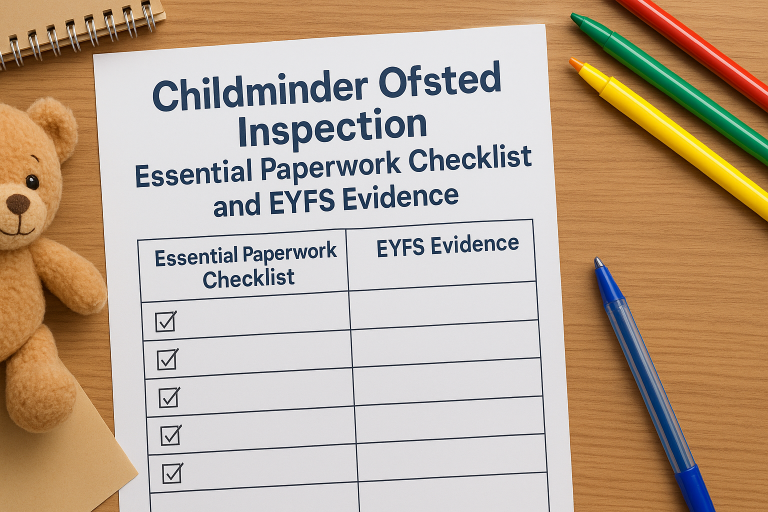
The thought of an Ofsted inspection can feel overwhelming, especially in a busy home setting where documentation often competes with direct childcare. However, the modern inspection framework is designed to focus on what you do, not what you write.
This guide cuts through the noise. We’ll give you the essential paperwork checklist to meet mandatory requirements and show you exactly how to demonstrate high-quality EYFS evidence without drowning in binders.
1. The Essential “Must-Have” Paperwork Checklist
Inspectors want to see that you are meeting the statutory requirements of the Early Years Foundation Stage (EYFS) framework. If you’re missing these items, it could result in an immediate finding.
Here is your mandatory “front-of-the-binder” list. Keep these organized and easily accessible.
Registration Documents: Your Ofsted registration certificate.
The EYFS Framework: A copy of the current EYFS statutory framework, which outlines all legal requirements you must meet. You can find the latest version on the official government website. Read the full EYFS statutory framework here.
Safeguarding Policy: This is non-negotiable. It must be specific to your setting and detail procedures for reporting concerns.
First Aid Certificate: Proof that your First Aid training is current and appropriate for early years.
DBS/Suitability Checks: Evidence of DBS checks and suitability for all adults over 16 living or working on the premises.
Accident/Incident and Medication Records: Up-to-date logs showing how you manage and record accidents, incidents, and medication administration.
Children’s Files: Key information for each child, including emergency contacts, dietary needs, permissions, and registration forms.
2. Linking Observations to EYFS Evidence: Quality Over Quantity
The key to passing your EYFS inspection is demonstrating the impact of your care, not the volume of your observations. Inspectors are primarily looking for a clear understanding of the three I’s (Intent, Implementation, and Impact) as outlined in the Education Inspection Framework (EIF).
The “Three I’s” in the Home Setting
I | What the Inspector is Looking For | Practical Childminder Paperwork Evidence |
|---|---|---|
Intent (What are you teaching?) | A clear curriculum plan (what you want children to know and be able to do). | Your long-term planning/sequence of learning, even if it’s just a simple document linking your activities to the seven areas of the EYFS. |
Implementation (How are you teaching it?) | How you use the environment, resources, and interactions to deliver your curriculum. | Annotated photos, short observation notes showing a response to a child’s interest, or quick notes in a shared journal. |
Impact (What did they learn?) | How well children are progressing and the evidence of that progress (not just data). | Summative assessments (e.g., two-year check), and examples of how you have adapted your teaching to close gaps. |
Top Tip: Instead of weekly observations, focus on tracking progress on a few specific children over a longer period. Inspectors love to see that you know your children well enough to spot when a child needs extra support and how you implement that support.
For more detailed ways to embed the EYFS into your daily planning and setting setup, read our guide on Continuous Provision for Childminders.
3. Practical Tips for Inspection Day
Your home setting is unique. Here’s how to use that to your advantage during the Ofsted inspection:
A. The “Show, Don’t Tell” Method
During the inspection, rely on real-time interactions, not documentation.
Be a Tour Guide: Walk the inspector through your home and point out how areas support learning. (“The kitchen is our area for PSED and Mathematical Development when we bake.”)
Have a Display Board: Use a small, dedicated space to showcase policies, your certificate, and your latest risk assessment summary.
Use the Children’s Voice: Have a scrapbook or display of photos with short quotes from the children explaining what they enjoy learning—this is powerful evidence of Impact.
B. Core Policies & Business Protection
While your policies don’t need to be huge documents, they must be current and reflect your practice. Ensure you have clear, written policies on:
Complaints procedure
Child Protection and Safeguarding (A vital resource is the Keeping Children Safe in Education (KCSIE) guidance: KCSIE 2024 (Part 1))
Non-collection of children
Sickness and infection control
Effective policies are the backbone of a successful business. To ensure your business is protected, review our advice on Childminder Fees and Contracts.
Finally, always remember to review the current Education Inspection Framework (EIF) so you know exactly what inspectors are expected to evaluate: Read the latest Education Inspection Framework (EIF) guidance.
Final Confidence Boost
Remember, the inspector wants to see a childminder who is safe, knowledgeable, and passionate. Your setting is your expertise. Prepare the mandatory paperwork, practice explaining the why behind your activities, and let your confidence in your practice shine through!
The Childminding Journey Made Simple: Your Step-by-Step Solution
 Navigating the necessary training, the endless forms, the complex language of Ofsted, and preparing for your home inspection can often feel like a massive undertaking. You shouldn’t have to piece together scattered advice from Facebook groups or spend months guessing what to do next.
This is exactly why we created the Become a Registered Childminder in the UK – Step-by-Step course.
It’s the complete roadmap – everything you need to go from idea to fully registered childminder and beyond.
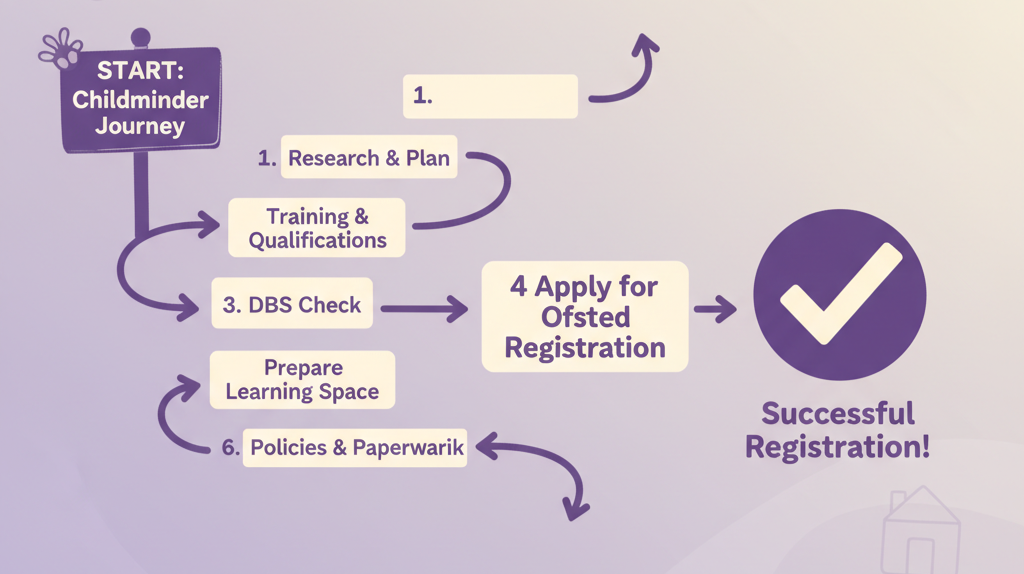
Why This Course is Your Essential Tool:
Saves Months of Guesswork: Get clear, beginner-friendly guidance with no jargon, so you know exactly what to do and in what order.
Avoids Costly Mistakes: Set up correctly from the very start, avoiding common pitfalls that delay registration or cost you money.
Everything You Need: The course provides clear video lessons, written guides, essential checklists, and editable templates for your policies and contracts.
Proven Support: Built by professionals who’ve opened nurseries and successfully registered multiple childminders, giving you real inspection examples.
Affordable Investment: For a single, one-time payment of £49.00, you get lifetime access and save hundreds in potential agency fees by learning to register directly.
By the end of this course, you will not only know exactly how to register with confidence but also be ready to run your business professionally and profitably.
Ready to take the confusion out of registration?
Not Ready to Enrol Yet? Get Your Free Childminder Startup Guide
We understand that becoming a childminder is a big decision, and you might need a little more clarity before investing.
Download our FREE Childminder Startup Checklist to get a head start on planning your business and preparing your home.
Inside, you’ll get:
The 3 Essential Steps you can take today without spending a penny.
A breakdown of the initial costs to expect.
A summary of the required space and equipment.
This is the perfect next step for anyone in the planning stage.