
Clear, Real-Life Examples So You Don’t Accidentally Break the Rules
Childminder ratios are one of the most misunderstood areas of the EYFS and one of the easiest ways to unintentionally breach regulations.
Many new childminders worry:
-
“How many children can I actually care for?”
-
“What happens if I take on siblings?”
-
“Can I ever go over ratios?”
-
“What will Ofsted ask me about this?”
This guide explains exactly what the ratios are, how they work in real life, and how to stay compliant without confusion or stress.
What Are Childminder Ratios?

Childminder ratios set the maximum number of children you can care for at any one time.
They exist to ensure:
-
Children are safe
-
Children receive appropriate supervision
-
Individual needs are met
Ratios are a legal requirement, set out in the Early Years Foundation Stage (EYFS).
The Standard Childminder Ratios (England)
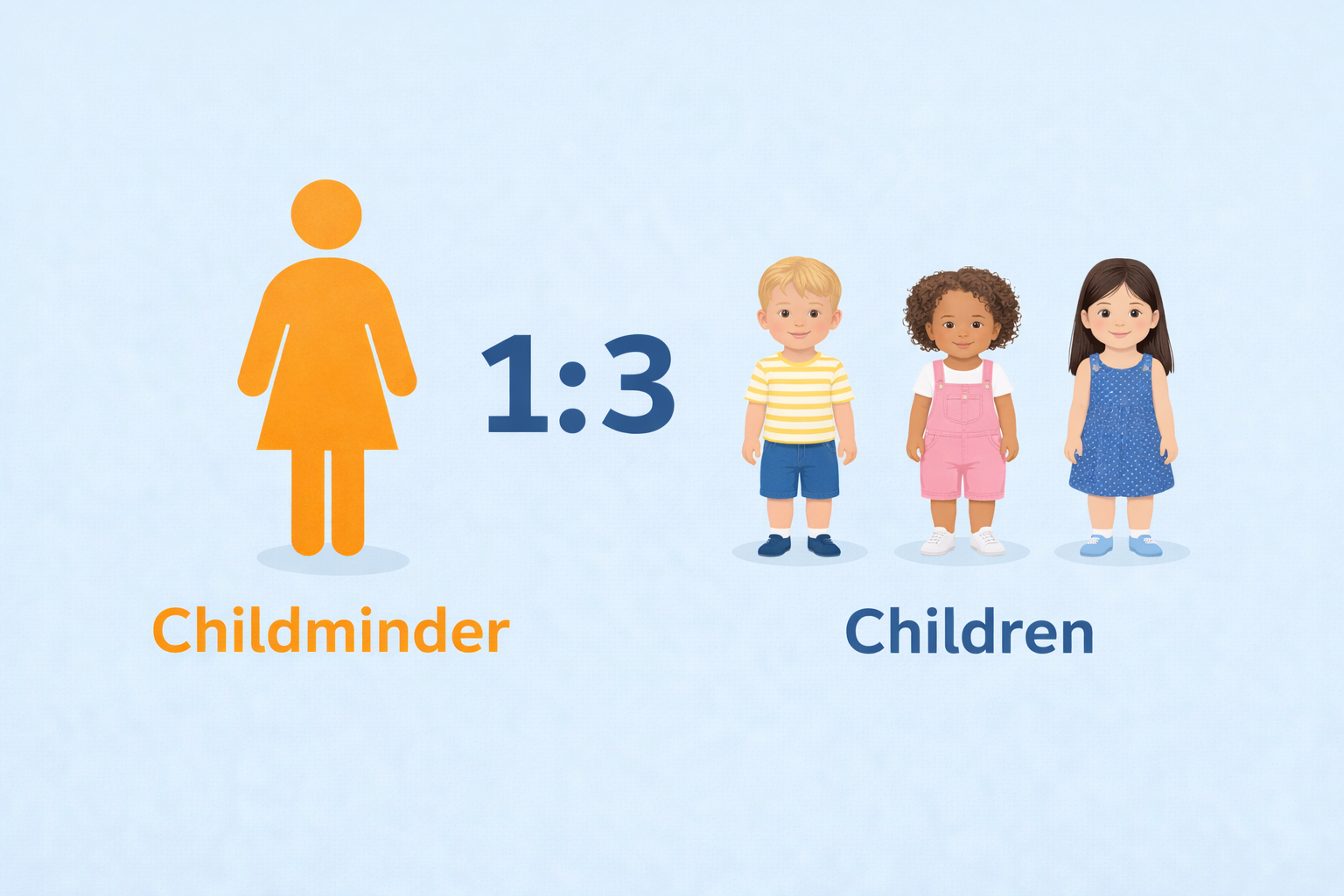
Under the EYFS, a registered childminder may care for:
-
Up to 6 children under the age of 8
-
Of those 6:
-
Only 3 can be under 5
-
Only 1 can be under 1
-
This is the baseline rule that applies in most situations.
Breaking It Down by Age
Under 1 Year Old
-
Maximum: 1 child
-
Reason: Babies require constant, individual attention
Aged 1-4 Years
-
Maximum total: 3 children under 5
-
Includes the under-1 child
Aged 5-7 Years
-
Can care for additional children up to a total of 6 under 8
Once a child turns 8, they no longer count in ratio numbers but supervision responsibilities still apply.
Does Your Own Child Count in Ratios?

Yes – your own children count in ratios if:
-
They are under 8
-
They are present during childminding hours
This includes:
-
Your biological children
-
Adopted children
-
Foster children living in your home
This is a very common area where new childminders make mistakes, so it’s important to plan carefully.
Can You Ever Go Over Ratios?

In limited and specific circumstances, you may be able to exceed ratios but this is not automatic.
You must be able to show that:
-
The care of all children remains safe
-
Individual needs are met
-
You are not routinely exceeding ratios
Typical examples include:
-
Caring for siblings
-
Continuity of care
-
Temporary changes (e.g. school closures)
 Important:
You must be able to clearly explain and justify this decision to Ofsted.
What Ofsted Will Ask You About Ratios
Inspectors may ask questions like:
-
“How many children are you caring for today?”
-
“What ages are they?”
-
“How do you ensure supervision?”
-
“What would you do if a parent asked for extra hours?”
They are checking:
-
Your understanding
-
Your judgement
-
Your ability to prioritise safety
They are not trying to trick you they want reassurance that you know the rules.
Supervision Is Just as Important as Ratios

Even if you are within ratios, you must still ensure:
-
Children are always supervised
-
You can see or hear children at all times
-
You can respond quickly to needs
Ofsted looks at practical supervision, not just numbers on paper.
Common Ratio Mistakes to Avoid
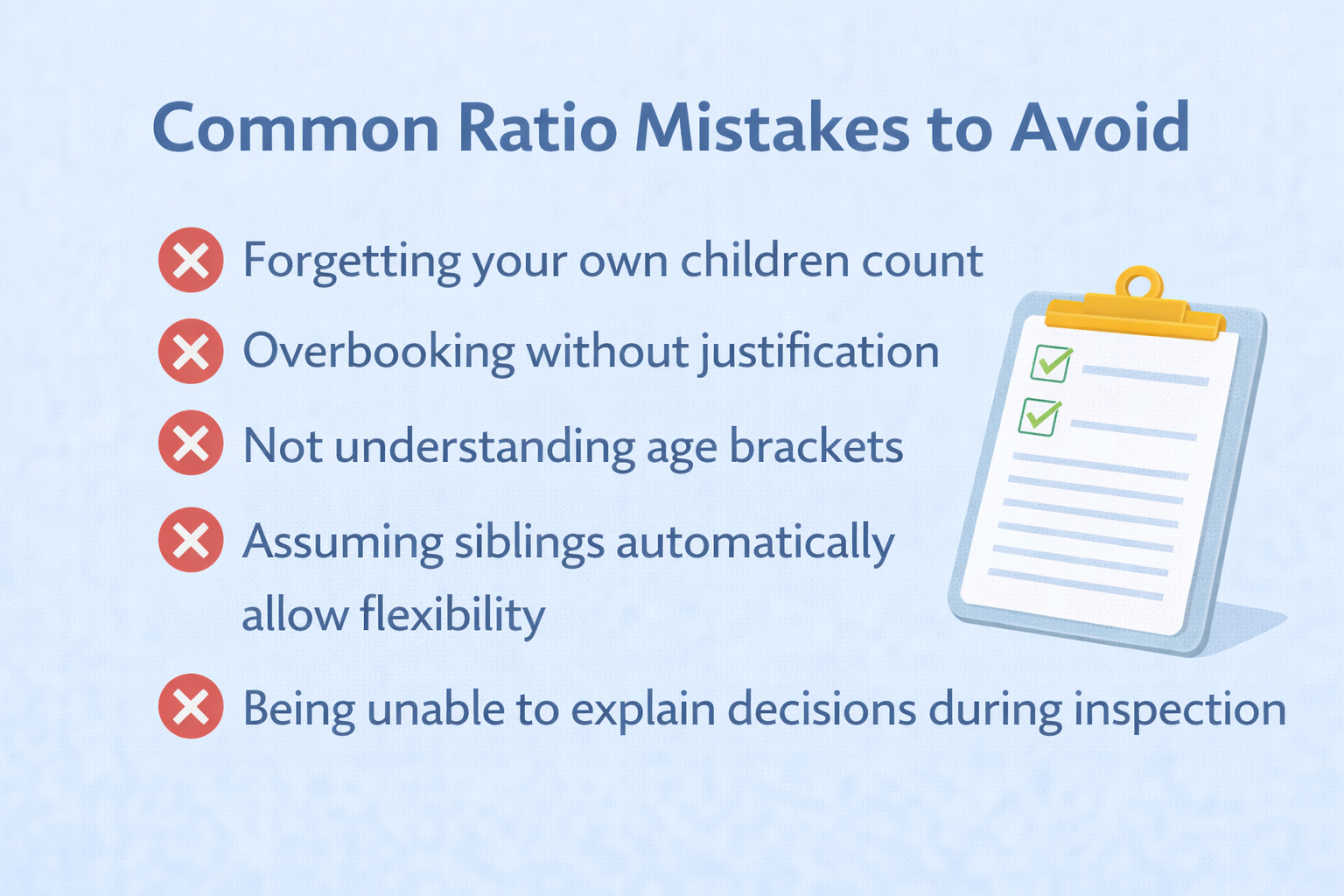
 Forgetting your own children count Overbooking without justification Not understanding age brackets Assuming siblings automatically allow flexibility Being unable to explain decisions during inspection
Understanding ratios early prevents problems later.
Planning Your Business Around Ratios
Ratios directly affect:
-
Your income
-
Your daily routine
-
Your stress levels
Smart childminders plan:
-
Which ages they will accept
-
Whether to take siblings
-
School runs vs full-day care
-
Long-term sustainability
This is where treating childminding as a business — not a favour — becomes essential.

If the EYFS still feels overwhelming, that’s normal.
Every childminder feels this way at the beginning.
That’s exactly why I created the Become a Registered Childminder in the UK – Step-by-Step Course.
Inside the course, you’ll get:
✔ Clear EYFS explanations (no jargon)
Understand what Ofsted wants and how to meet the requirements easily.
✔ Real examples from childminders I’ve trained
Learn how they passed inspection and set up their homes.
✔ Ready-made templates
Policies, contracts, risk assessments, planning sheets.
✔ Video walkthroughs of each step
So you never feel lost or overwhelmed.
✔ Everything for just £49
And you keep all your profits — no agency fees.