
Creating an Inspiring Home-from-Home
How to Set Up Your Childminding Space
When a parent walks into a nursery, they expect bright colors, plastic storage, and a professional “facility” feel. But when they walk into a childminder’s home, they are looking for something entirely different. They are looking for warmth, comfort, and a space where their child can feel truly at peace while learning.
Creating a high-quality learning environment doesn’t mean turning your living room into a primary school classroom. In fact, the most successful childminders are those who manage to blend professional educational “zones” with the cozy, nurturing atmosphere of a family home. It’s about intentionality—showing Ofsted and parents that every corner of your space has been designed with a child’s development in mind.
This guide will walk you through how to audit your home, choose the right resources without breaking the bank, and create a “Yes Space” where children can explore safely and confidently.
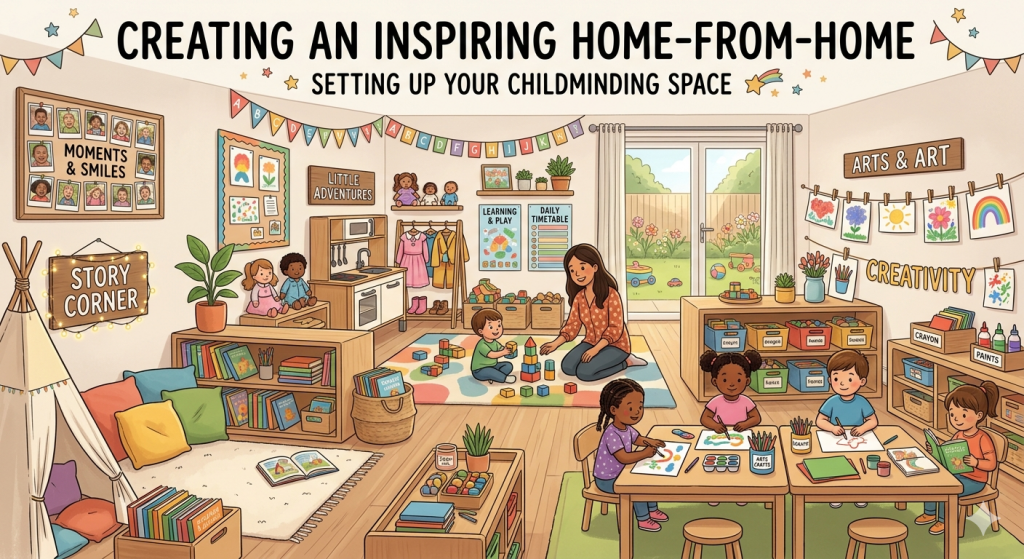
1. The Power of “Zoning” Your Living Space
You don’t need a dedicated playroom to be an outstanding childminder. Most providers use their main living area. The secret is “zoning”—creating invisible boundaries that tell a child what kind of play happens where.
-
The Cozy Corner: Every setting needs a quiet space. A few floor cushions, a small rug, and a basket of diverse books create a sanctuary for children who need a break from the noise.
-
The Messy Zone: Usually located near a hard floor or a wipeable mat, this is for playdough, painting, or “tuff tray” activities. Keeping this contained makes your cleanup easier and defines the “high-energy” area.
-
The Role-Play Nook: You don’t need a massive plastic kitchen. A small wooden crate with some real (but safe) pots, pans, and old telephones encourages much more imaginative “real-world” play.
2. Choosing “Open-Ended” Resources
One of the biggest mistakes new childminders make is buying too many “single-purpose” plastic toys (the ones that only do one thing when you press a button). These often lead to shorter attention spans.
-
Loose Parts Play: Collect items like large pebbles, pinecones, curtain rings, and cardboard tubes. These are “open-ended”—a child can turn a tube into a telescope, a car ramp, or a marble run.
-
Authentic Materials: Children love doing what adults do. Instead of plastic food, use real (dried) pasta or metal whisks. It provides a better sensory experience and teaches them to respect real objects.
-
Investing in Quality: If you are going to spend money, spend it on “anchor” items that last for years, such as a sturdy wooden block set or a high-quality sand and water table.
3. Creating a “Communication-Friendly” Environment
Ofsted looks closely at how your environment supports language. Your walls and shelves should “talk” to the children.
-
Low-Level Displays: If you hang pictures of the children’s work, put them at their eye level, not yours. Use photos of the children’s families or local landmarks to spark conversations.
-
Labels with Photos: Label your toy baskets with both the word and a photo of what goes inside. This encourages independence during tidy-up time and helps with early word recognition.
-
Mirror Magic: Placing safe, acrylic mirrors at floor level allows babies to discover their own reflections and facial expressions, which is a huge part of early self-awareness.
4. Maximizing Outdoor Learning
The EYFS places a huge emphasis on outdoor play. You don’t need a giant garden; even a balcony or a local park can be a “classroom.”
-
The Mud Kitchen: A simple bench with some old bowls and dirt is often the most popular area in any setting. It encourages heavy lifting, mixing, and sensory exploration.
-
Wildlife Watching: A bird feeder or a “bug hotel” made from old bricks and sticks provides endless opportunities to talk about nature and the world around us.
-
Taking the Inside Out: Most “indoor” activities, like reading or mark-making with chalk, feel brand new when done sitting on a blanket on the grass.
5. The “Golden Rule”: Risk Benefit, Not Risk Aversion
As a childminder, your home must be safe, but it shouldn’t be “sterile.” A child who never encounters a small step or a slightly uneven surface never learns how to navigate the world.
-
Risk Assessments: Instead of removing every slight challenge, document how you supervise it. For example, “We use the stairs, but I am always positioned behind the child to support them.”
-
Independence First: Arrange your furniture so children can reach their own aprons, choose their own toys, and help themselves to water. An environment that fosters independence is an environment where children thrive.
Conclusion: Your Home is Your Greatest Asset
Remember, parents are choosing you because you are not a nursery. They want their child to bake in a real kitchen, look at birds in a real garden, and nap in a quiet, familiar room. By thoughtfully organizing your space and choosing resources that spark curiosity, you aren’t just “baby-proofing” your house—you are building a launchpad for a child’s early education. Your home is a place of wonder; you just have to set the stage.
Ready to turn your home into a thriving business? Setting up your environment is one of the most creative and fun parts of becoming a childminder, but getting the paperwork and safety requirements right is just as vital. If you’re feeling overwhelmed by where to start, my course provides a step-by-step roadmap to help you register, set up, and succeed.
You can find out more about the course below.
The Childminding Journey Made Simple: Your All-in-One EYFS Solution
If the EYFS still feels overwhelming, that’s normal.
Every childminder feels this way at the beginning.
That’s exactly why I created the Become a Registered Childminder in the UK – Step-by-Step Course.
Inside the course, you’ll get:
✔ Clear EYFS explanations (no jargon)
Understand what Ofsted wants and how to meet the requirements easily.
✔ Real examples from childminders I’ve trained
Learn how they passed inspection and set up their homes.
✔ Ready-made templates
Policies, contracts, risk assessments, planning sheets.
✔ Video walkthroughs of each step
So you never feel lost or overwhelmed.
✔ Everything for just £49
And you keep all your profits — no agency fees.
Why This Course is Your Essential Tool:
Saves Months of Guesswork: Get clear, beginner-friendly guidance with no jargon, so you know exactly what to do and in what order.
Avoids Costly Mistakes: Set up correctly from the very start, avoiding common pitfalls that delay registration or cost you money.
Everything You Need: The course provides clear video lessons, written guides, essential checklists, and editable templates for your policies and contracts.
Proven Support: Built by professionals who’ve opened nurseries and successfully registered multiple childminders, giving you real inspection examples.
Affordable Investment: For a single, one-time payment of £49.00, you get lifetime access and save hundreds in potential agency fees by learning to register directly.
By the end of this course, you will not only know exactly how to register with confidence but also be ready to run your business professionally and profitably.
Ready to take the confusion out of registration?
Not Ready to Enrol Yet? Get Your Free Childminder Startup Guide
We understand that becoming a childminder is a big decision, and you might need a little more clarity before investing.
Download our FREE Childminder Startup Checklist to get a head start on planning your business and preparing your home.
Inside, you’ll get:
-
The 3 Essential Steps you can take today without spending a penny.
-
A breakdown of the initial costs to expect.
-
A summary of the required space and equipment.
This is the perfect next step for anyone in the planning stage.