
Why puzzles are one of the most powerful (and underrated) learning tools in a home setting
Puzzles are often seen as “quiet toys” or something to fill time but in childminding, they are far more than that.
Used correctly, puzzles support multiple areas of the EYFS, help children develop focus and resilience, and give Ofsted clear evidence of learning all without worksheets, screens, or formal teaching.
This guide shows you how to use puzzles intentionally, what Ofsted looks for and how to link them naturally to the EYFS.
Why Puzzles Are Ideal for Childminders
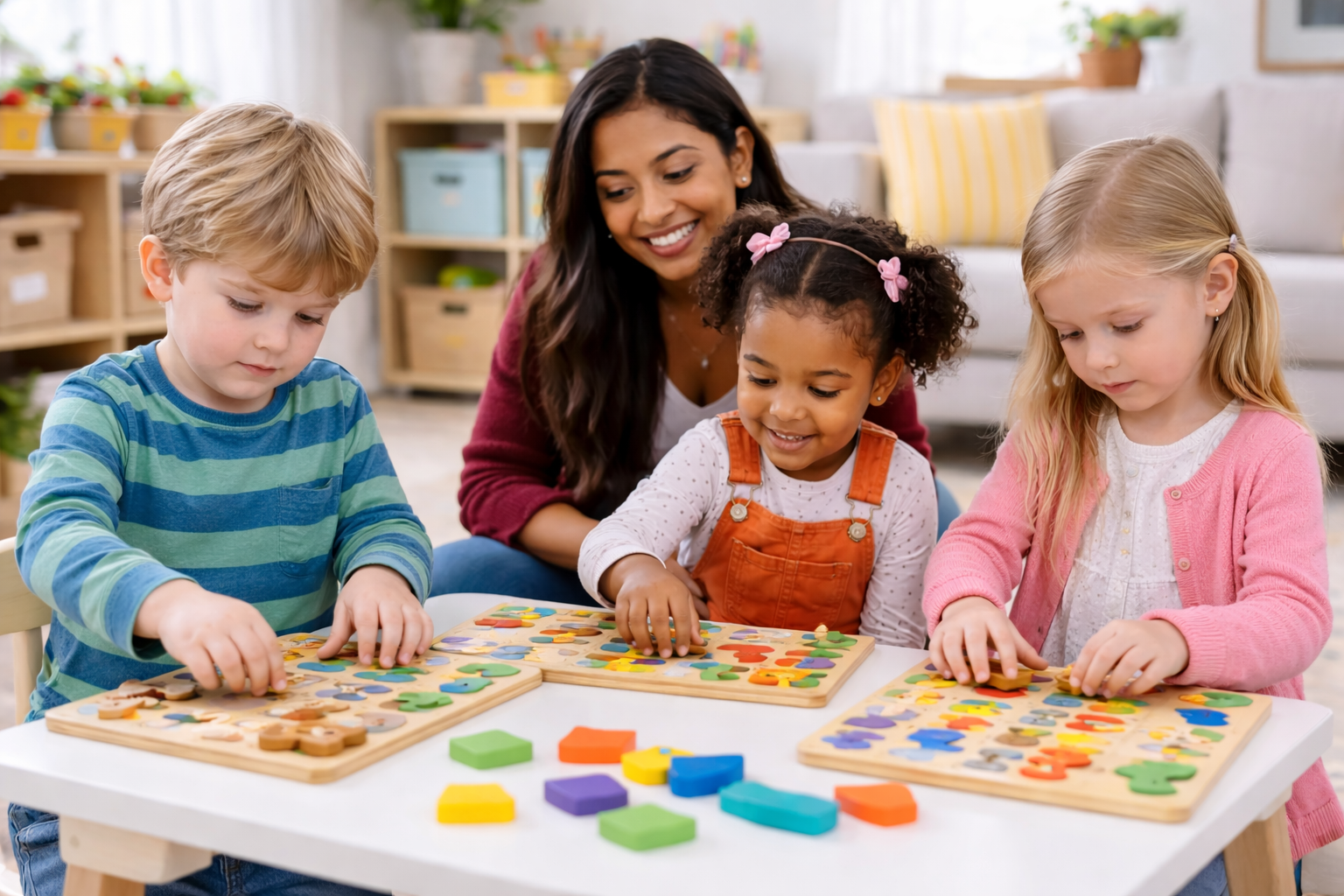
Puzzles are perfect for childminding because they are:
-
Low-cost
-
Easy to store
-
Suitable for mixed ages
-
Calm and engaging
They also encourage independent play, which is especially helpful when caring for more than one child.
Most importantly, puzzles allow you to observe learning without interrupting play.
EYFS Areas Supported by Puzzles
Puzzles can support at least four EYFS areas when used intentionally.
🧠 Physical Development
-
Hand–eye coordination
-
Fine motor skills
-
Grip and control
Children learn to manipulate pieces, turn shapes, and place items accurately, all key foundations for writing later on.
🔢 Mathematics
Puzzles naturally introduce:
-
Shape recognition
-
Counting
-
Size and position
-
Problem-solving
Examples:
-
Number puzzles → counting and sequencing
-
Shape sorters → geometry and spatial awareness
You don’t need to “teach” maths — it happens through play.
🗣 Communication & Language
While completing puzzles, children:
-
Name objects
-
Ask for help
-
Follow instructions
-
Build vocabulary
You can extend learning by:
-
Asking open-ended questions
-
Naming colours, shapes, or animals
-
Encouraging turn-taking and conversation
This is excellent evidence for Ofsted.
💛 Personal, Social & Emotional Development (PSED)
Puzzles help children:
-
Build patience
-
Cope with challenge
-
Feel proud of achievement
Completing a puzzle gives a clear sense of success, which builds confidence and resilience — something inspectors love to see.
Choosing the Right Puzzles by Age
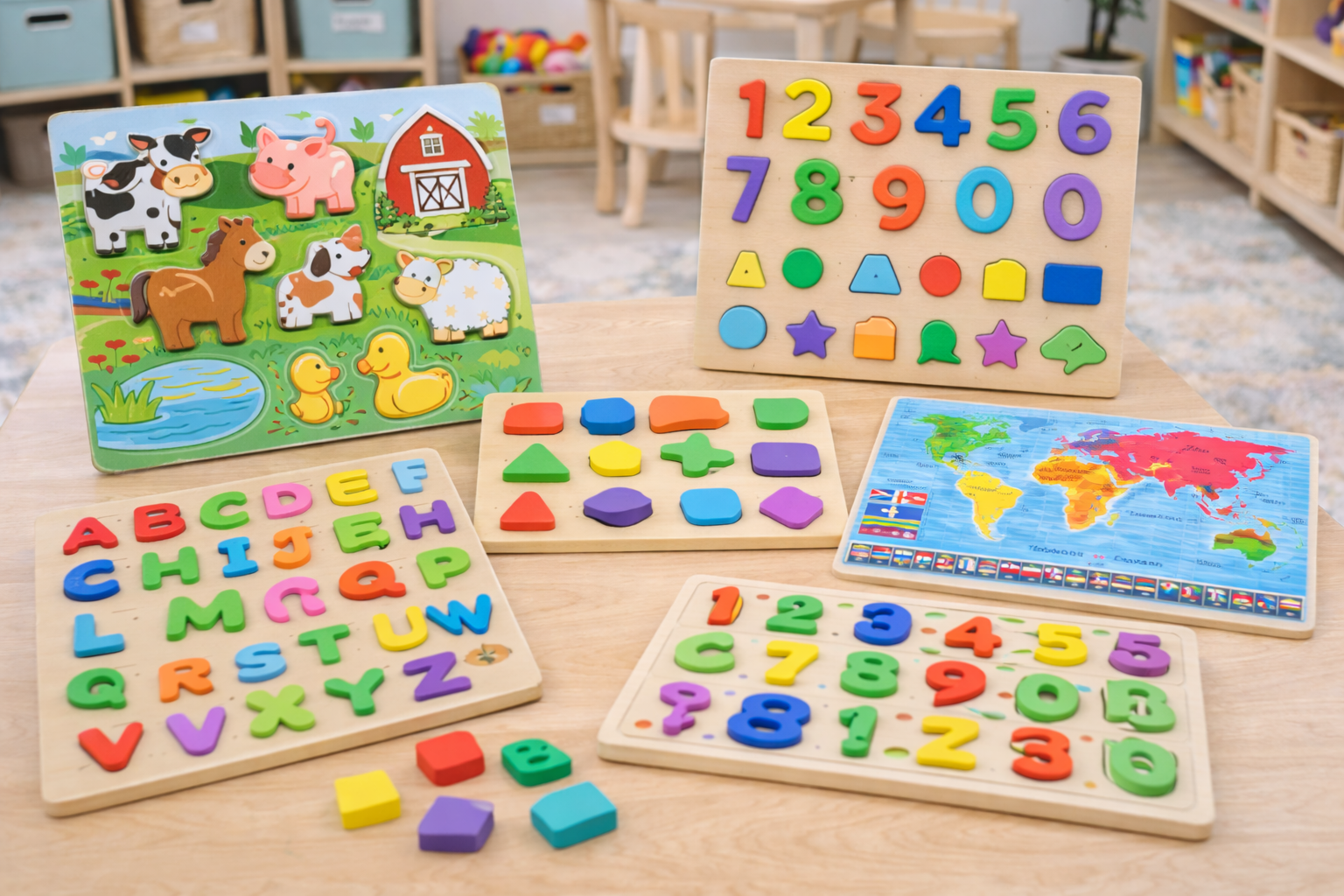
👶 Babies & Young Toddlers
-
Large knob puzzles
-
Simple shape sorters
-
Soft or chunky wooden pieces
Focus: exploration, movement, curiosity.
👧 Toddlers (2–3 years)
-
4–12 piece puzzles
-
Matching pictures
-
Animals, vehicles, everyday objects
Focus: problem-solving, vocabulary, persistence.
🧒 Older Children (3–5 years)
-
Jigsaw puzzles
-
Number or alphabet puzzles
-
Sequencing or pattern puzzles
Focus: concentration, reasoning, early maths and literacy.
How to Use Puzzles During the Day
Puzzles work well:
-
During free play
-
As a calm transition activity
-
While settling children in
-
During quiet time
They don’t need a “slot”, they can be offered naturally as part of your environment.
What Ofsted Likes to See
Ofsted is not assessing the puzzle, they are assessing your interaction.
They like to see:
-
You observing learning
-
You supporting without taking over
-
Children choosing activities independently
-
Learning happening naturally
You might explain:
“This activity supports fine motor skills and problem-solving. I extend learning by asking questions and introducing language.”
That’s more than enough.
Linking Puzzles to Observations (Without Extra Work)
You don’t need long written observations.
A simple note could be:
-
“Completed 6-piece puzzle independently”
-
“Recognised numbers 1–5”
-
“Persisted after initial difficulty”
These small observations show clear EYFS progress over time.
Common Mistakes to Avoid
❌ Correcting children too quickly
❌ Turning it into a test
❌ Using puzzles only as “filler”
❌ Expecting all children to complete puzzles
Remember: effort matters more than completion.
Why Simple Activities Matter More Than Fancy Resources
Many new childminders worry they need expensive equipment.
They don’t.
Ofsted values:
-
Intentional play
-
Responsive adults
-
Learning through everyday activities
Puzzles are a perfect example of simple done well.
If the EYFS still feels overwhelming, that’s normal.
Every childminder feels this way at the beginning.
That’s exactly why I created the Become a Registered Childminder in the UK – Step-by-Step Course.
Inside the course, you’ll get:
✔ Clear EYFS explanations (no jargon)
Understand what Ofsted wants and how to meet the requirements easily.
✔ Real examples from childminders I’ve trained
Learn how they passed inspection and set up their homes.
✔ Ready-made templates
Policies, contracts, risk assessments, planning sheets.
✔ Video walkthroughs of each step
So you never feel lost or overwhelmed.
✔ Everything for just £49
And you keep all your profits — no agency fees.