
Beyond the Clipboard
A Deep Dive into Your First Ofsted Registration Visit
For many, the word “Ofsted” triggers a flutter of nerves. It conjures images of an inspector in a sharp suit, clutching a clipboard and peering into every cupboard of your home. If you are currently in the process of registering as a childminder, the Registration Visit often called the “Pre-Registration Inspection” probably feels like the final boss level of a very long game. You might be worried that your house isn’t “perfect,” that you’ll forget the answer to a safeguarding question, or that your garden isn’t big enough to meet their standards.
However, it is important to reframe how you view this visit. The inspector isn’t coming to find reasons to fail you; they are coming to see if you have the potential to provide a safe, nurturing, and educational environment. They aren’t looking for a show-home; they are looking for a professional who understands their responsibilities. In fact, most inspectors are former early years practitioners themselves who genuinely want to see new, passionate childminders enter the sector to support local families.
This guide takes you behind the scenes of the registration visit, showing you exactly what to prepare, how to conduct yourself, and how to demonstrate that you are ready to be an “Outstanding” provider from day one.
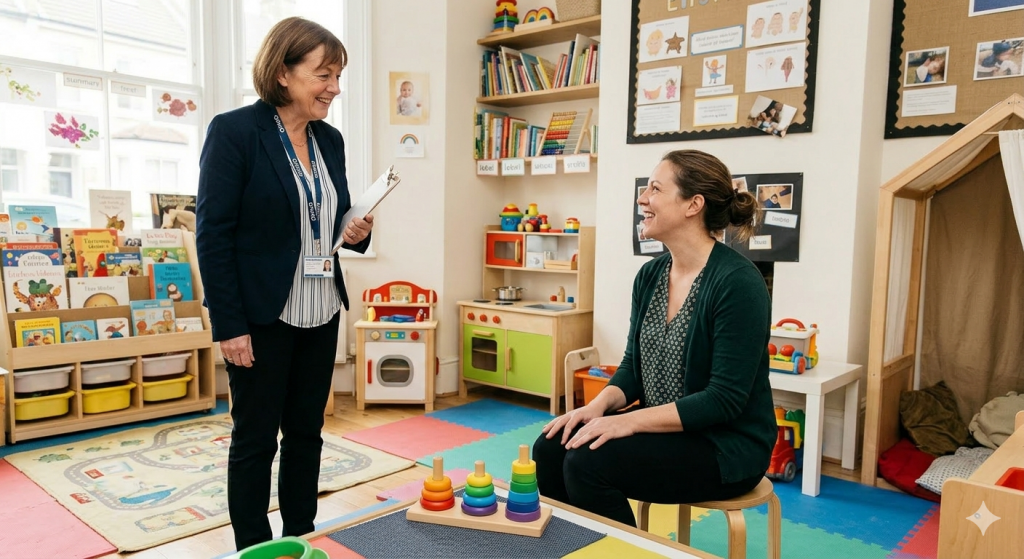
1. The Two Halves of the Visit: Safety and Suitability
The inspector is essentially looking at two things: Is your home safe? And are you a suitable person to be left in charge of children?
The Home Tour: You will walk the inspector through every room that children will have access to. They aren’t checking your décor; they are looking for hazards. Are the cleaning products locked away? Is there a fire blanket in the kitchen? Is the garden fence secure?
The Discussion: This is the most important part. You will sit down and talk through your policies. You don’t need to memorize them word-for-word, but you must be able to explain the intent behind them. For example, if they ask about your sickness policy, they want to hear how you balance the needs of the sick child with the health of the other children in your care.
2. Mastering the Safeguarding Questions
Safeguarding is the “red line” of any inspection. You must demonstrate that you know exactly what to do if you have a concern about a child’s welfare.
Recognising Signs: Be prepared to discuss the different types of abuse (physical, emotional, sexual, and neglect) and the signs you might look for in a child’s behavior or appearance.
The Referral Process: Know your local authority’s “Multi-Agency Safeguarding Hub” (MASH) contact details. The inspector wants to know that you wouldn’t hesitate to escalate a concern if necessary.
Prevent Duty: You should have a basic understanding of the “Prevent Duty,” which involves protecting children from radicalization and promoting “British Values” like tolerance and mutual respect.
3. Demonstrating Your “Pedagogy” (Your Way of Teaching)
The inspector will want to know how you plan to help children learn. This is where your knowledge of the EYFS (which we covered in a previous article) comes into play.
Starting Points: Explain how you will find out what a child can already do when they first start with you. Will you talk to the parents? Will you observe them playing?
Planning for Progress: How will you choose toys and activities that challenge the children? If a child loves dinosaurs, how will you use that interest to teach them about counting or different habitats?
The “Golden Thread”: An inspector loves to see a “thread” connecting your activities. If you are reading a book about a caterpillar, they’ll be impressed to see you’ve planned a fruit-tasting session or a walk to find real bugs.
4. The Importance of Professionalism and Paperwork
While the physical environment is important, your “Business Folder” acts as the backbone of your registration.
Mandatory Documents: Ensure your Paediatric First Aid certificate, your DBS checks (for everyone in the house over 16), and your Public Liability Insurance quote are ready on the table.
Identity Checks: Have your passport and proof of address ready. The inspector needs to verify that you are who you say you are before they can approve your registration.
Your Self-Evaluation: Even though you haven’t started yet, have a “Vision Statement.” Tell the inspector what kind of childminder you want to be. Showing that you are already thinking about how to improve your service is a sign of a high-quality provider.
5. Managing the “On the Day” Nerves
The way you handle the inspection is often a reflection of how you will handle a busy day with four toddlers.
Be Yourself: Don’t try to use jargon if it doesn’t feel natural. Use your own words to describe your passion for childcare.
Ask for Clarification: If the inspector asks a question and you aren’t sure what they mean, ask them to rephrase it. It’s better to take a moment to think than to rush into an answer.
Treat it as a Conversation: Think of the inspector as a consultant who is there to help you cross the finish line. They often offer great advice on how to tweak your layout or your paperwork for maximum efficiency.
Conclusion: You’ve Got This
The registration visit is the final bridge between your dream and your new reality. It is a rigorous process, but it is also a stamp of approval that tells the world—and your future clients—that you are a trained, capable, and safe professional. Once that inspector leaves and your certificate arrives in the post, you aren’t just a “babysitter”; you are a registered educator with a bright career ahead of you. Take a deep breath, get your folders in order, and remember why you started this journey in the first place.
Ready to ace your registration visit with zero stress? The secret to a successful inspection is preparation. My course includes a comprehensive “Inspection Prep” module, featuring a full checklist of every question an inspector is likely to ask and a guide to “Ofsted-proofing” your home. We take the guesswork out of the process so you can walk into your visit with total confidence.
Find out more about the course below.
The Childminding Journey Made Simple: Your All-in-One EYFS Solution
If the EYFS still feels overwhelming, that’s normal.
Every childminder feels this way at the beginning.
That’s exactly why I created the Become a Registered Childminder in the UK – Step-by-Step Course.
Inside the course, you’ll get:
✔ Clear EYFS explanations (no jargon)
Understand what Ofsted wants and how to meet the requirements easily.
✔ Real examples from childminders I’ve trained
Learn how they passed inspection and set up their homes.
✔ Ready-made templates
Policies, contracts, risk assessments, planning sheets.
✔ Video walkthroughs of each step
So you never feel lost or overwhelmed.
✔ Everything for just £49
And you keep all your profits — no agency fees.
Why This Course is Your Essential Tool:
Saves Months of Guesswork: Get clear, beginner-friendly guidance with no jargon, so you know exactly what to do and in what order.
Avoids Costly Mistakes: Set up correctly from the very start, avoiding common pitfalls that delay registration or cost you money.
Everything You Need: The course provides clear video lessons, written guides, essential checklists, and editable templates for your policies and contracts.
Proven Support: Built by professionals who’ve opened nurseries and successfully registered multiple childminders, giving you real inspection examples.
Affordable Investment: For a single, one-time payment of £49.00, you get lifetime access and save hundreds in potential agency fees by learning to register directly.
By the end of this course, you will not only know exactly how to register with confidence but also be ready to run your business professionally and profitably.
Ready to take the confusion out of registration?
Not Ready to Enrol Yet? Get Your Free Childminder Startup Guide
We understand that becoming a childminder is a big decision, and you might need a little more clarity before investing.
Download our FREE Childminder Startup Checklist to get a head start on planning your business and preparing your home.
Inside, you’ll get:
-
The 3 Essential Steps you can take today without spending a penny.
-
A breakdown of the initial costs to expect.
-
A summary of the required space and equipment.
This is the perfect next step for anyone in the planning stage.