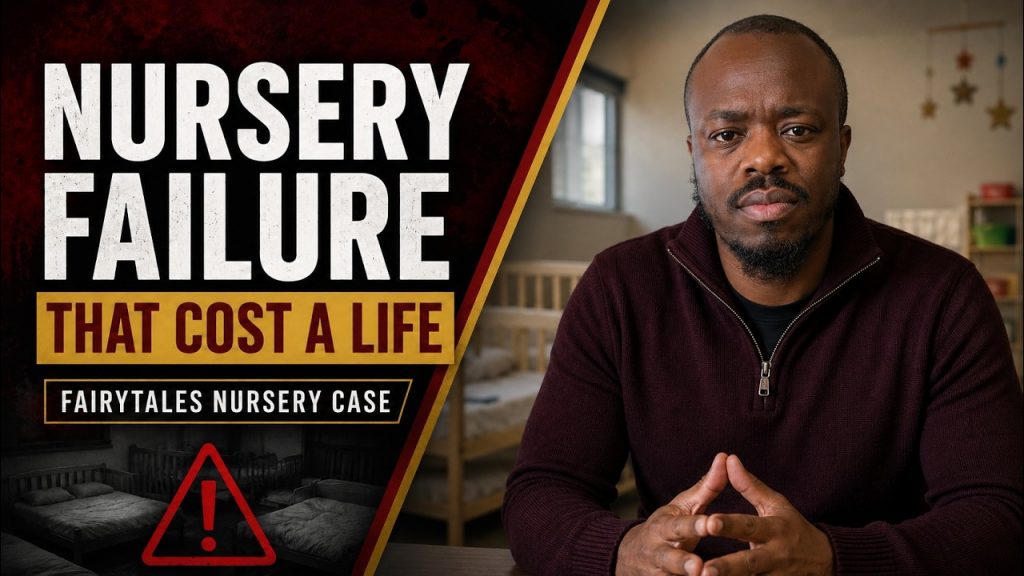
The closing of the legal proceedings surrounding the death of 14-month-old Noah Sibanda at Fairytales Day Nursery in Dudley stands as a stark moment of reckoning for the British early years sector.
While court verdicts have been delivered, resulting in custodial sentences for the practitioner directly involved and a suspended sentence for the setting’s owner, the true professional obligation of “never again” rests upon the shoulders of early years leaders across the UK.
This case study goes beyond the headlines to examine the anatomy of a systemic failure. It explores how a culture of compromise, inadequate oversight, and operational shortcuts can transform a registered childcare setting from a safe environment into a place of extreme risk.
1. Defining Systemic Failure in Early Years Settings
A systemic failure occurs when a tragedy or serious incident is not merely the result of a single isolated error by an individual staff member, but rather the consequence of multiple, interconnected breakdowns across an entire organisation.
When a nursery operates on a foundation of poor leadership, inadequate training, ignored policies, and compromised ratios, it creates an environment where a single human error can prove fatal.
In the case of Fairytales Day Nursery, the prosecution demonstrated that the environment had slowly deteriorated into a culture of “blind luck”, where safety standards were routinely bypassed until that luck eventually ran out.
2. The Core Operational Failures at Fairytales
The court evidence revealed a series of profound operational failures that every nursery owner and manager must understand to audit their own settings effectively:
I. Compromised Ratios and Overcrowding
Ratios within the early years sector are legal minimums established to guarantee safe supervision. Evidence showed that the baby room at Fairytales was routinely over capacity, meaning practitioners were stretched far beyond statutory limitations. When ratios are compromised, basic care routines become unmanageable.
II. Inadequate Sleep Room Monitoring
Safe sleep policies require physical, visual, and rhythmic checks on sleeping infants. At Fairytales, the safe sleep policy was treating a separate sleep room as an unmonitored space. Infants were left unsupervised for extended periods without the mandatory physical checks to ensure they were breathing safely and had not turned onto their fronts.
III. The Culture of Shortcuts
When staff are overworked, undertrained, or unsupervised, they begin to take shortcuts to cope with the immediate workload. In an environment lacking robust pedagogical and operational leadership, these shortcuts become normalised as “the way things are done.”
3. Leadership Accountability vs. Practitioner Responsibility
One of the most critical outcomes of this case is the clear message it sends regarding legal and moral accountability in childcare management.
| Role | Legal & Professional Accountability |
| The Registered Provider (Owner) | Responsible for the overall governance, safety systems, sufficiency of resources, and the culture of the setting. They cannot delegate away ultimate liability. |
| The Setting Manager / DSL | Responsible for day-to-day compliance, enforcing policy, monitoring staff practice, and acting immediately on safeguarding concerns. |
| The Individual Practitioner | Responsible for the direct care, safe execution of duties, and maintaining professional standards for the children immediately in their charge. |
As we often emphasise when guiding prospective owners through their initial setups, such as in “Before You Open a Nursery – Watch This.” the mental load of ownership is rooted in this exact reality. You are legally responsible for the systems that keep children alive. If your systems are weak, your business, your freedom, and children’s lives are at stake.
4. Statutory Compliance: Auditing Your Sleep Room Procedures
To ensure absolute compliance with Ofsted standards and statutory frameworks, every early years provider should immediately review and enforce a strict Safe Sleep Standard Operating Procedure (SOP).
Physical Presence: A practitioner should ideally remain in the sleep room when infants are resting. If this is structurally impossible, a strict physical check must happen at least every 10 minutes.
Visual Verification: Practitioners must physically look at the child’s chest to see the rise and fall of breath and ensure the face is uncovered. Audio or digital video monitors are supplementary tools and must never replace physical checks.
Rigorous Documentation: Every single check must be logged immediately on a physical or digital chart, noting the exact time, the child’s positioning, and the initials of the staff member who conducted the check.
5. Overcoming Fear-Based Practice Through Robust Governance
Discussing tragedies like the Fairytales case can understandably cause a wave of anxiety, stress, and trauma for dedicated early years professionals. It can sometimes lead to “fear-based practice,” where teams feel entirely paralysed by the fear of what might go wrong.
The antidote to fear-based practice is robust, confident governance.
When a team has clear policies, outstanding training, and a supportive culture where they can speak up without fear of retaliation, they operate with clarity rather than anxiety. As highlighted in “Staff Retention: How to Stop Your Best Practitioners from Leaving”, a high-quality culture is one where staff feel safe enough to challenge a shortcut, ask for help with ratios, or point out an operational risk to their manager.
Conclusion: A Professional Pledge to Safety
The Fairytales Day Nursery case study is a devastating reminder of why the early years sector is so heavily regulated. The rules, the paperwork, the ratios, and the inspections are not administrative burdens, they are the critical guardrails designed to protect the most vulnerable members of our society.
As early years leaders, our collective response to this tragedy must be a renewed commitment to uncompromising standards. Tomorrow, when you walk into your setting, look at your rooms, your sleep spaces, and your routines with fresh, critical eyes. Challenge the shortcuts, support your teams, and ensure your nursery remains an absolute bastion of safety and care.
Compliance & Quality Assurance Resources:
Tags:
Fairytales Day Nursery case study, Noah Sibanda early years safety, Nursery safeguarding systemic failure, Ofsted sleep room regulations, Early years leadership accountability, Nursery risk assessment policy, Dudley nursery tragedy lessons, Safe sleep procedures EYFS, Childcare compliance UK, Early years statutory framework safety, Nursery baby room ratios, Safeguarding governance early years, Managing childcare risks, Curtly Ania, Open a Nursery.

 Go From Nursery Worker to Nursery Owner In Just 6 Months