
Ofsted to Carry Out 3,000 More Surprise Nursery Visits Each Year
The government has announced new funding for thousands of additional unannounced Ofsted visits to nurseries and early years settings in England.
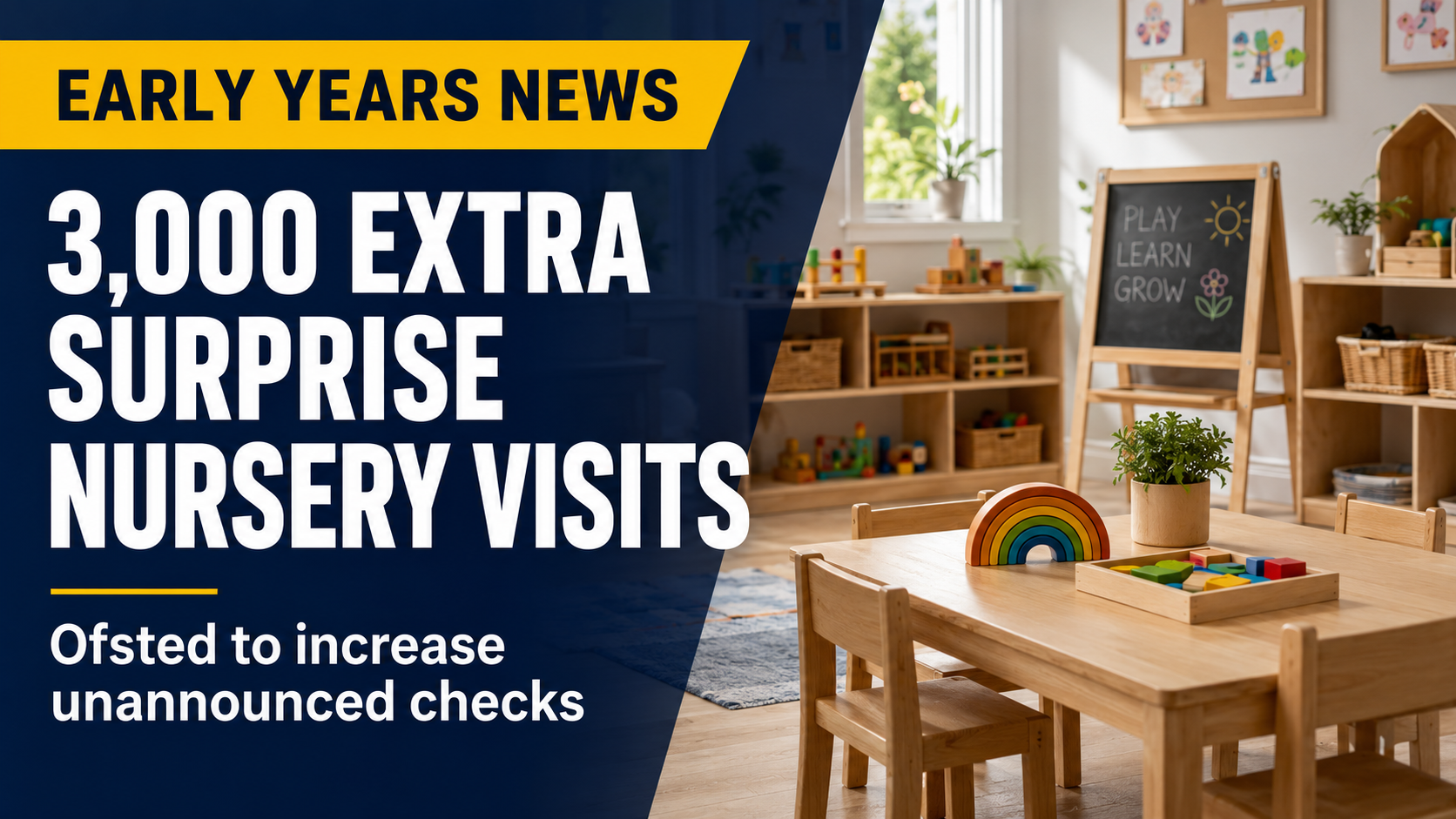
The Department for Education has announced more than £8 million a year in new funding to support 3,000 additional unannounced Ofsted visits to nurseries and early years settings.
The government says the move is designed to strengthen safeguarding, identify risks earlier and give parents greater confidence that children are safe in early years settings.
The announcement comes after a period of increased public attention on nursery safety, safeguarding failures, safe sleep practices and how quickly concerns are acted on when they are raised by parents, staff or professionals.
Quick summary
- The government has announced more than £8 million a year for early years safeguarding.
- The funding will support 3,000 extra unannounced Ofsted visits to nurseries and early years settings.
- The aim is to identify risks sooner and allow faster action where urgent issues are found.
- The announcement also includes tougher pre-registration checks for new providers.
- The government says it is reviewing how nursery chains are regulated.
- Safeguarding, welfare and wellbeing are becoming even more central to early years inspection.
What has been announced?
The Department for Education has confirmed new annual investment of over £8 million to support stronger safeguarding in early years settings. The main headline is that Ofsted will carry out 3,000 additional unannounced visits to nurseries and early years settings each year.
These visits are not the same as routine inspections. They are intended to help Ofsted act more quickly where there are concerns, investigate risks sooner and intervene before problems escalate.
The government says the additional visits will help provide parents with assurance that safeguarding across the early years system is being upheld to the highest possible standards.
Why is this happening now?
This announcement follows several serious early years cases that have caused public concern and increased pressure on government and Ofsted to strengthen safeguarding oversight.
In recent months, there has been significant attention on nursery safety, safe sleep, staff supervision, whistleblowing, allegations against staff, and how quickly regulators act when concerns are raised.
The timing also matters because Ofsted has already been changing how it inspects early years providers. From April 2026, Ofsted began moving early years inspections onto a four-year inspection window, with full implementation expected by March 2030. Alongside this, safeguarding and children’s welfare remain central to the inspection approach.
Will every nursery get a surprise visit?
No, not necessarily.
The announcement does not mean every nursery will suddenly receive an additional unannounced visit. The extra visits are expected to be used where Ofsted needs to investigate concerns, check risk, follow up intelligence or take faster action.
Routine inspections will still continue separately. Ofsted’s published early years inspection information says settings on the Early Years Register will normally be inspected at least once within a four-year window, with newly registered providers usually having their first inspection within 18 months of registration.
However, where Ofsted has concerns about a setting, it can visit more frequently. These additional unannounced visits appear to strengthen that ability.
What could trigger an unannounced Ofsted visit?
Ofsted has not published a simple checklist saying exactly what will trigger one of these extra visits. But based on how regulation works, unannounced activity could be linked to concerns such as safeguarding complaints, whistleblowing, serious incident notifications, allegations against staff, repeated concerns from parents, local authority information, or patterns that suggest children may be at risk.
This is why early years providers need to treat safeguarding records, staff supervision, risk assessments, incident reporting and Ofsted notifications seriously. If concerns are raised, Ofsted will want to see that the provider has identified the issue, responded properly and taken action to protect children.
| Area | Why it matters |
|---|---|
| Safeguarding concerns | Providers must be able to show concerns are recorded, escalated and acted on properly. |
| Staff allegations | Allegations against staff must be handled appropriately, including LADO referrals and Ofsted notifications where required. |
| Safe sleep | Recent early years cases have placed greater focus on safe sleeping arrangements and supervision. |
| Whistleblowing | Staff need to feel able to raise concerns and leaders must respond quickly when they do. |
| Leadership oversight | Ofsted will expect leaders to know what is happening in the setting and respond to emerging risks. |
Tougher checks before nurseries open
The announcement is not only about existing nurseries. The Department for Education also said the funding will support tougher checks before providers are registered.
This is important for anyone planning to open a nursery because Ofsted registration is not just an admin process. Ofsted needs to be satisfied that the provider is suitable, understands safeguarding responsibilities and can meet the legal requirements of the Early Years Foundation Stage.
For new providers, this means safeguarding knowledge, safer recruitment, suitability checks, risk management, policies, premises safety and leadership arrangements need to be taken seriously from the start.
Nursery chains may face closer scrutiny
The government has also said it is working with Ofsted to review how nursery chains are regulated. This follows growing concern about whether large nursery organisations should face stronger oversight at group level, rather than regulation focusing mainly on individual settings.
This matters because safeguarding issues in a large organisation may not always be isolated to one building. Sometimes the concern may be about leadership, governance, training, supervision, escalation or consistency across several settings.
If the regulation of nursery chains is tightened, larger providers may face more scrutiny over how they monitor safeguarding across their whole organisation.
What does this mean for nursery owners and managers?
For good providers, this announcement should not cause panic. But it does mean nurseries should expect safeguarding systems to be looked at closely, especially where concerns have been raised.
Nursery owners and managers should make sure safeguarding is not just written in policies but visible in daily practice. That means staff understand procedures, records are accurate, concerns are followed up, risk assessments are live, and leaders know what is happening in the setting.
It also means being honest about weaknesses. If a problem is identified, Ofsted will usually want to see that leaders noticed it, acted quickly and made changes to protect children.
Questions providers should ask themselves
- Would staff know exactly what to do if they had a concern about a child?
- Would staff know what to do if they had a concern about another adult?
- Are safeguarding records clear, factual and followed up?
- Are serious incidents and allegations notified correctly?
- Do leaders review patterns, not just individual incidents?
- Are safe sleep procedures understood and followed in practice?
- Is staff supervision meaningful, or just a paperwork exercise?
- Can leaders explain how they monitor safeguarding across the setting?
What does this mean for parents?
For parents, the announcement is likely to be welcomed because it suggests Ofsted will have more capacity to act when concerns arise.
Parents want reassurance that nurseries are safe, that complaints are listened to, and that regulators can intervene quickly if something is wrong. The extra visits are being presented as a way to strengthen confidence in the early years system.
However, it is also important to say that most nurseries and practitioners work extremely hard to keep children safe. Increased inspection activity should not automatically be read as a sign that all nurseries are unsafe. It is more about strengthening the system so that concerns can be investigated earlier.
Final thoughts
The announcement of 3,000 more surprise Ofsted visits is a significant development for the early years sector.
It shows that safeguarding, welfare, leadership and regulatory oversight are now firmly at the centre of the national childcare conversation.
For nursery providers, the message is clear: make sure your safeguarding systems are not only in place, but working properly in real life. For parents, the hope is that faster, more targeted regulatory action will help identify risks earlier and keep children safer.
Preparing to open or run a nursery?
If you are opening a nursery, preparing for Ofsted registration, or want to strengthen your understanding of early years compliance, my nursery start-up course and consultations can help you prepare properly.
View the Nursery Start-Up CourseSources used
- Department for Education: Safer nurseries with 3,000 more surprise Ofsted visits
- Ofsted: Find an inspection report
- Ofsted: Early years inspection information
- Ofsted Early Years Blog: How safeguarding and children’s welfare underpin early years inspections
- Early Years Alliance: Ofsted to triple number of unannounced visits
- ITV News: Parents welcome 3,000 extra surprise Ofsted checks
Free Early Years Updates
Keep up with important early years developments
Subscribe to receive new articles about Ofsted, the EYFS, childcare funding, safeguarding and nursery business directly in your inbox.
- Important Ofsted and inspection updates
- EYFS and childcare policy changes
- Funding and nursery business news
- Clear explanations of what changes mean
Subscribe for free updates
Enter your details below and you will receive an email when a new important article is published.
Your information will be handled in accordance with our Privacy Policy . You can unsubscribe at any time.