
Government Proposes Changes to Early Years Funding: What Nursery Owners Need to Know
The Department for Education has launched a consultation on changes to early years funding, including SEND funding, the Early Years National Funding Formula and local funding rules.
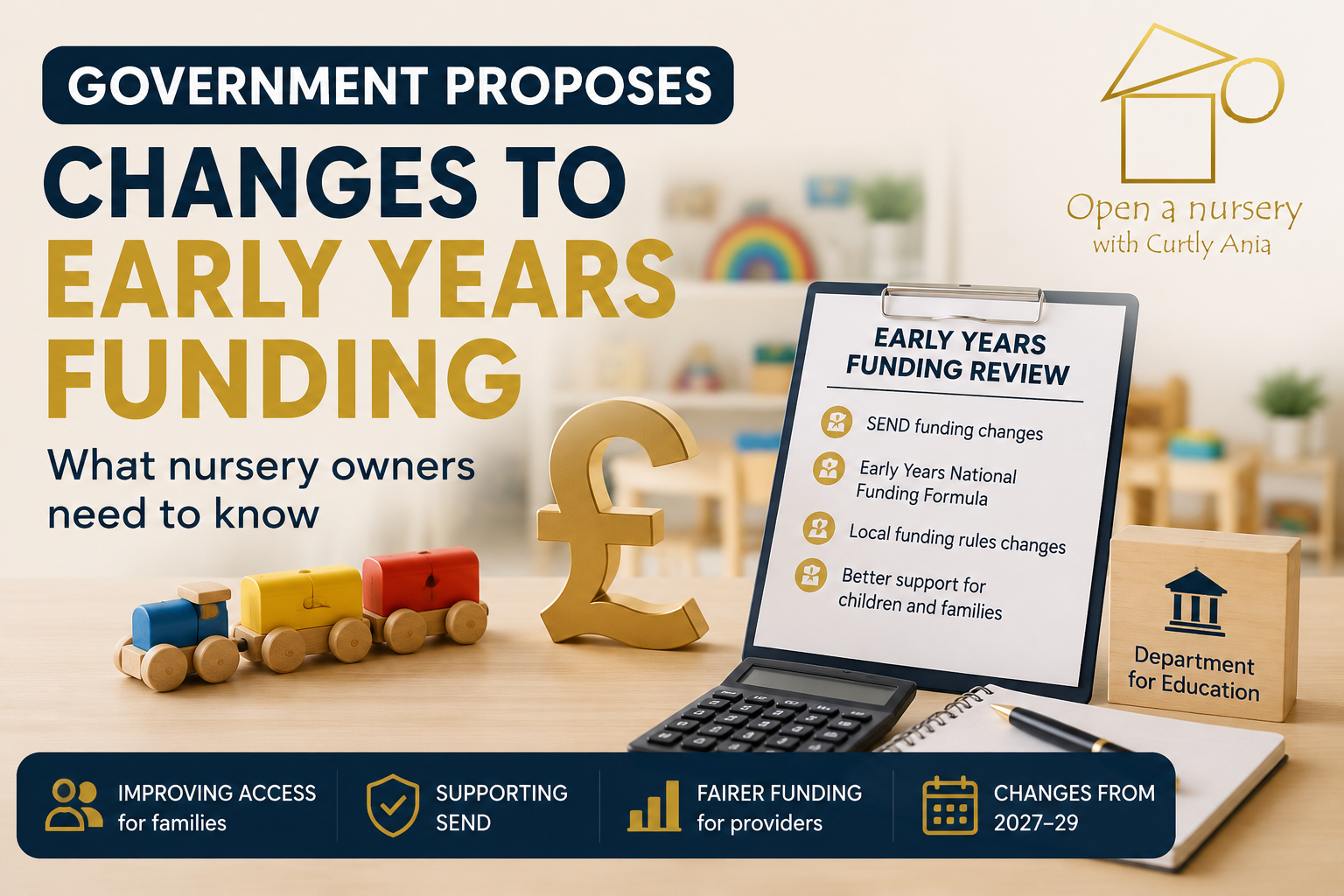
The government has launched a consultation on proposed changes to the early years funding system in England, with a focus on SEND funding, disadvantage, local funding rules and how money is allocated to local authorities and providers.
This may sound technical, but it matters. Early years funding affects nursery fees, provider sustainability, support for children with SEND, staffing decisions, and whether childcare places are affordable and available for families.
The Department for Education says it is seeking views on reforms to the early years entitlements funding system. The consultation includes proposals linked to the Early Years National Funding Formula, SEND support, local authority funding rules and how the system can better support access to childcare for children and families.
Quick summary
- The Department for Education has launched a consultation on early years funding reform.
- The consultation looks at SEND funding, disadvantage, the Early Years National Funding Formula and local funding rules.
- Many of the proposed changes are expected to affect funding from 2027 to 2029 onwards.
- The government says it wants a funding system that supports access, inclusion and consistency.
- Nursery providers, childminders, local authorities, parents and sector organisations can respond.
- The consultation is important because it could shape how early years funding works for years to come.
What has the government announced?
The Department for Education has opened a consultation called Changes to the funding system for early years entitlements. The consultation asks for views on how the early years funding system should be reformed.
The proposals include changes to how funding is distributed through the Early Years National Funding Formula, how SEND funding works in the early years, how local authorities allocate money to providers and how the system can better support children from lower-income families.
For nursery owners and managers, this is worth paying attention to because funding rules directly affect the money settings receive for funded childcare places.
Why does this matter?
Early years funding has become one of the biggest issues in the childcare sector. Parents often hear about “free childcare”, but many nurseries say the funding rate does not always cover the true cost of delivering care.
When the funding system does not work well, providers may feel squeezed. That can affect staff wages, opening hours, the ability to support children with additional needs, investment in resources and whether settings can offer enough funded places.
At the same time, families need childcare to be affordable, accessible and high quality. That is why any change to the funding system matters not only to nurseries, but also to parents and children.
What areas are being looked at?
The consultation covers several important areas. Some are technical, but they all connect to the same bigger question: how should early years funding be shared fairly and effectively?
| Area | Why it matters |
|---|---|
| SEND funding | Children with additional needs often require more support, staffing, training and resources. Providers need funding that reflects this properly. |
| Early Years National Funding Formula | This helps determine how much funding local authorities receive for early years entitlements. |
| Local funding rules | Local authorities decide how funding is passed on to providers, so rule changes can affect what nurseries actually receive. |
| Disadvantage funding | The system needs to support access to early education for children from lower-income families and those facing barriers. |
| Provider sustainability | If funding does not meet real delivery costs, nurseries may increase extras, limit funded places or struggle financially. |
The SEND funding issue
One of the most important parts of the consultation is SEND funding. Early years providers often report that supporting children with SEND can be difficult when funding is delayed, inconsistent or not enough to cover the support needed.
For a nursery, this can create a difficult position. Providers want to be inclusive and support children well, but they also need the right staffing, training, ratios, resources and specialist advice to do that safely and effectively.
Early Education has said the consultation focuses on SEND and disadvantage, but also argues that wider issues in the early years funding system still need to be addressed.
What could this mean for nursery owners?
For nursery owners, the consultation is not something to ignore just because some changes may not happen immediately.
If the funding formula changes, some local authorities could receive more funding while others may receive less than expected. If SEND funding is reformed, this could affect how quickly nurseries can access support for children with additional needs. If local funding rules change, this may affect the amount that reaches providers directly.
In practical terms, nursery owners should be watching for anything that affects:
- Hourly funding rates for funded childcare places.
- How much funding local authorities must pass on to providers.
- How SEND support is accessed and allocated.
- Whether funding reflects local cost pressures.
- Rules around additional charges, meals, consumables and extras.
- The financial viability of offering funded places.
What could this mean for parents?
For parents, the funding system affects more than people realise.
If nurseries are underfunded, parents may see higher charges for extras, limited funded-only places, shorter funded sessions, increased waiting lists or fewer providers offering the full funded entitlement in a flexible way.
If the funding system improves, it could help more families access childcare that is genuinely affordable and more inclusive for children with SEND.
However, whether the proposals will solve those issues depends on the detail, the funding rates and how local authorities implement any changes.
Why providers should respond
Consultations can feel distant from day-to-day nursery life, but this is one where providers should consider giving their views.
Nursery owners, managers, childminders and early years organisations understand the reality of delivering funded childcare. They know where funding falls short, where SEND support gets delayed, where local authority rules create problems and where families struggle to understand what they are entitled to.
Coram PACEY has encouraged the early years sector to engage with the consultation, noting that it is important for the Department for Education to hear directly from providers, childminders and those working with families.
My view
Any review of early years funding is welcome, but the key question is whether the proposals will deal with the real pressures providers face.
Nurseries do not only need a funding system that looks fair on paper. They need one that works in real life. That means funding should reflect staffing costs, rising overheads, SEND support, training, administration, meals, resources and the actual cost of delivering safe, high-quality care.
Parents also need honesty. If childcare is described as “free”, but providers cannot deliver it without charging extras or restricting sessions, then the system creates frustration on both sides.
The best outcome would be a funding system that is clearer for parents, fairer for providers and better able to support children with additional needs from the earliest stage.
What happens next?
The consultation is now open and the Department for Education is seeking views from the sector. After the consultation closes, the government will consider responses before confirming any changes to the funding system.
Nursery providers should keep an eye on the outcome because any reforms could affect future funding rates, SEND support arrangements and local authority funding rules.
For anyone planning to open a nursery, this is also worth watching. Funding is one of the most important parts of a nursery’s financial model, so any change to how money is allocated can affect business planning.
Opening a nursery and trying to understand the numbers?
If you are planning to open a nursery, understanding funding, fees, occupancy, staffing and financial planning is essential. My nursery start-up course walks you through the key steps so you can plan properly before committing to a property or registration.
View the Nursery Start-Up CourseSources used
- Department for Education: Changes to the funding system for early years entitlements
- Department for Education consultation page: Proposed changes to the entitlements funding system
- Early Education: Consultation on early years funding in England focuses on SEND and disadvantage
- Coram PACEY: DfE launches early years funding consultation in England
- Department for Education: Early years entitlements local authority funding operational guide 2026 to 2027
Free Early Years Updates
Keep up with important early years developments
Subscribe to receive new articles about Ofsted, the EYFS, childcare funding, safeguarding and nursery business directly in your inbox.
- Important Ofsted and inspection updates
- EYFS and childcare policy changes
- Funding and nursery business news
- Clear explanations of what changes mean
Subscribe for free updates
Enter your details below and you will receive an email when a new important article is published.
Your information will be handled in accordance with our Privacy Policy . You can unsubscribe at any time.