
Government Considers Extending 30 Hours Free Childcare to Families on Benefits
The Education Secretary is reportedly considering extending the 30 hours funded childcare offer to more families, including some parents receiving benefits.
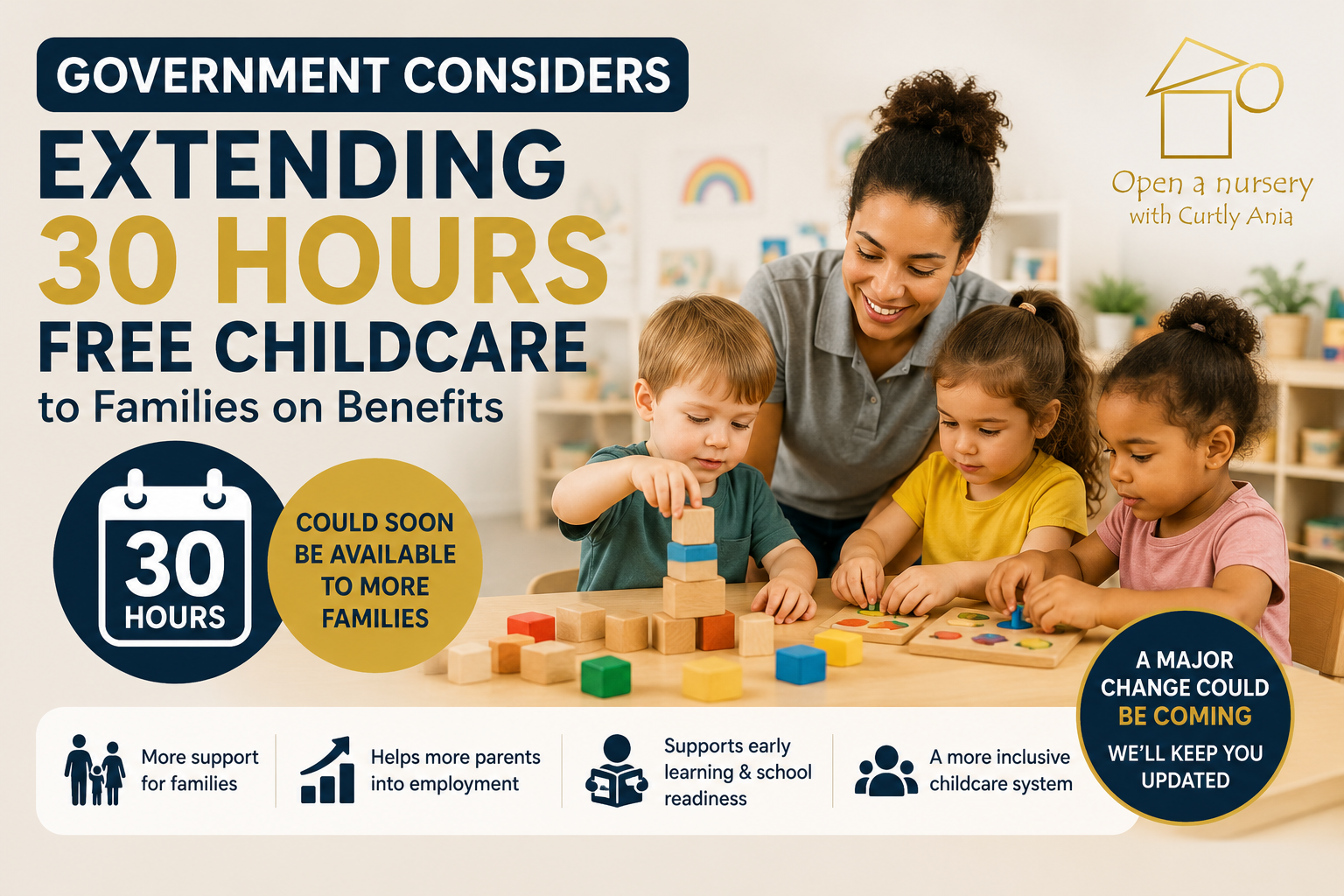
The government is reportedly considering whether the 30 hours funded childcare offer should be extended to more families, including families receiving benefits who are not currently eligible under the working-parent rules.
At the moment, the 30 hours funded childcare offer is mainly aimed at eligible working parents in England. Parents may be able to access 30 hours a week for children aged from 9 months to 4 years old, but eligibility depends on work and income rules.
According to reporting in The Times, Education Secretary Bridget Phillipson is considering extending 30 hours of funded childcare to families on benefits, with the aim of supporting disadvantaged children, improving school readiness and helping more parents move towards employment.
Important: This is not confirmed government policy yet. It is a reported proposal being considered. The current 30 hours offer still has eligibility rules based around working parents.
Quick summary
- The government is reportedly considering extending 30 hours childcare to families on benefits.
- The current 30 hours offer is mainly for eligible working parents in England.
- The proposal would aim to support children who may benefit most from early education.
- It could help improve school readiness and reduce disadvantage.
- For nurseries, it could increase demand for funded places.
- The key question is whether funding rates would cover the true cost of delivery.
What is being proposed?
The reported proposal would extend the 30 hours funded childcare offer to more families who are currently excluded because they do not meet the working-parent eligibility rules.
This would be a significant shift. The 30 hours offer has traditionally been linked to work, meaning parents usually need to be working, or about to start work, to qualify. Families on certain benefits may already be eligible for other forms of childcare support, such as 15 hours for some two-year-olds, but not necessarily the full 30 hours working-parent entitlement.
If the proposal goes ahead, it could move the childcare system closer to a more universal early years model, where access is based more on children’s needs and family circumstances, rather than only on parental employment status.
Why is this being considered?
There are three big reasons this idea is likely being discussed.
Firstly, early education can support children’s development before they start school. Children from disadvantaged backgrounds may benefit significantly from access to high-quality early years provision.
Secondly, childcare can help parents move into work or training. If parents cannot afford childcare, it can become a barrier to employment.
Thirdly, the government has already been expanding childcare support for working families. From September 2025, eligible working parents of children from 9 months old up to school age can access up to 30 hours of funded childcare a week. The question now is whether that support should be widened further.
What could this mean for parents?
For parents receiving benefits, this could be a major change if it becomes policy. It could make nursery places more affordable and give more children access to early education before starting school.
It could also help some parents take steps towards work, training or education by reducing one of the biggest barriers: childcare cost.
However, families would need clear information. The current childcare funding system is already confusing for many parents, with different rules for 15 hours, 30 hours, two-year-old funding, three and four-year-old funding, Tax-Free Childcare and Universal Credit childcare support.
If eligibility is expanded, the government would need to explain clearly who qualifies, when they can apply, how the hours work and whether nurseries can charge for meals, consumables or additional hours.
What could this mean for nurseries?
For nurseries, the proposal could create both opportunities and pressure.
On one hand, it could increase demand for nursery places, particularly in areas with higher levels of deprivation or lower parental employment. This may help some providers increase occupancy and reach more families who need support.
On the other hand, nurseries will want reassurance that funding rates will cover the true cost of delivery. Many providers already argue that funded childcare rates do not always reflect staffing costs, rent, food, utilities, resources, training and administration.
If the government expands eligibility without adequate funding, it could place more pressure on providers rather than solving the problem.
| Possible benefit | Possible challenge |
|---|---|
| More children could access early education. | Nurseries may need more staff and places to meet demand. |
| Parents on lower incomes may get more support. | Funding rates must cover the real cost of childcare. |
| More families may be able to move towards employment. | The application and eligibility rules could become more complex. |
| Nurseries in lower-income areas may see increased occupancy. | Providers may still need to charge for meals, consumables or extra hours. |
Could this help close the school readiness gap?
One of the strongest arguments for the proposal is that it could support children who may otherwise miss out on early education.
High-quality early years provision can support language development, social skills, routines, confidence and readiness for school. For children who face disadvantage, access to a good nursery or childminder can make a meaningful difference.
But access alone is not enough. Quality matters. If more children are offered places, providers need enough funding, staff, training and support to deliver good early education, not just childcare on paper.
The funding question
This is where nursery owners will be paying close attention.
The Times reported that expanding the offer could significantly increase the cost of childcare policy, with the annual cost potentially rising as eligibility widens. That raises the obvious question: where will the money come from, and how much will actually reach providers?
For nursery owners, the issue is not only whether families are entitled to hours. It is whether the hourly funding rate allows providers to deliver those hours sustainably.
If the rate is too low, nurseries may struggle to offer places without relying on additional charges, longer sessions, private-paying hours or higher fees elsewhere.
What should nursery owners watch for?
At this stage, nursery owners should not change their business plans based on a proposal that has not yet become policy. But they should keep an eye on the direction of travel.
Key questions to watch
- Will the proposal become official government policy?
- Which families on benefits would become eligible?
- Would the offer apply from 9 months old, age 2, or age 3?
- Would funding rates be increased to match the extra demand?
- Would local authorities receive additional support to administer it?
- Would nurseries be expected to offer funded-only places?
- How would this interact with Universal Credit childcare support?
My view
In principle, widening access to early education for disadvantaged children makes sense. If early years is genuinely about giving children the best start, then the children who may benefit most should not be locked out because their parents are not currently working.
But the policy will only work if it is funded properly. Nurseries cannot deliver high-quality childcare on good intentions alone. They need enough money to pay staff, maintain ratios, support children with additional needs, cover overheads and invest in quality.
There is also a balance to strike. Childcare policy should support children’s development, help parents into work and keep providers financially sustainable. If one of those parts is ignored, the system becomes strained.
Final thoughts
The reported proposal to extend 30 hours childcare to families on benefits could become a major early years policy debate.
For parents, it could mean wider access to childcare and early education. For children, it could support school readiness and reduce disadvantage. For nurseries, it could increase demand, but only if the funding works in practice.
For now, this is one to watch closely. It is not confirmed policy yet, but it shows that the government is thinking seriously about who gets access to funded childcare and whether the current system is fair enough.
Opening a nursery and trying to understand funded childcare?
If you are planning to open a nursery, understanding funded hours, fees, occupancy and financial planning is essential. My nursery start-up course helps you understand the key steps before you commit to a property or register with Ofsted.
View the Nursery Start-Up CourseSources used
- The Times: Minister wants free childcare extended to parents on benefits
- GOV.UK: Free Childcare for Working Parents
- Department for Education: Free childcare and the expansion of childcare support
- Department for Education: How to apply for 30 hours free childcare and check eligibility
- House of Commons Library: Expanding government-funded childcare in England
Free Early Years Updates
Keep up with important early years developments
Subscribe to receive new articles about Ofsted, the EYFS, childcare funding, safeguarding and nursery business directly in your inbox.
- Important Ofsted and inspection updates
- EYFS and childcare policy changes
- Funding and nursery business news
- Clear explanations of what changes mean
Subscribe for free updates
Enter your details below and you will receive an email when a new important article is published.
Your information will be handled in accordance with our Privacy Policy . You can unsubscribe at any time.