
Costs and Forecasting for Childcare on Domestic Premises (CoDP)
The Financial Roadmap
Making the decision to transition from a solo childminder to a provider of Childcare on Domestic Premises (CoDP) is arguably the biggest financial leap you will take in your childcare career.
As we discussed in previous articles, the threshold for this transition has now officially moved. Since November 2024, the “Rule of Five” applies: the moment you have five or more adults (including yourself and any co-childminders or assistants) working together in a home setting at the same time, you are no longer a childminder in the eyes of Ofsted. You are now a group provider.
This shift isn’t just a change in title; it is a change in your entire financial ecosystem. In this guide, we will break down the actual costs of setting up a CoDP and how to forecast your revenue to ensure your “nursery in a home” is a profitable venture.
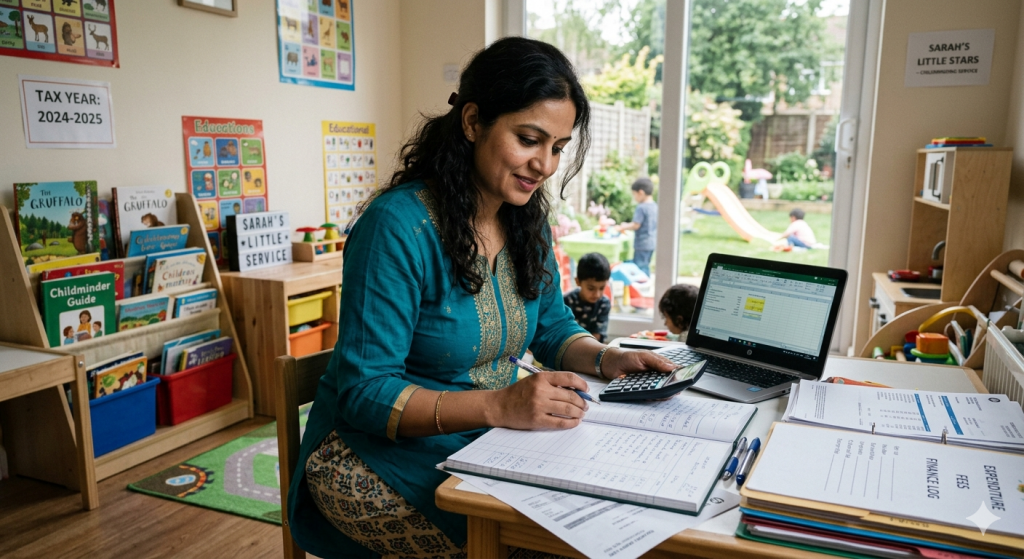
1. Pre-Opening Capital Expenditure (The Setup Costs)
Before you welcome your first cohort of children under your new CoDP registration, you will face several one-off “sunk costs.”
Planning Permission and Legal Fees
Unlike standard childminding, which usually falls under “incidental use” of a residential property, a CoDP setting with five staff and potentially 15–20+ children will almost certainly require Planning Permission for Change of Use.
Cost Estimate: Expect to pay between £500 and £1,500 for the application and associated floor plans.
Tip: Factor in the cost of a planning consultant if your local council is particularly strict about traffic and noise.
Ofsted Registration Fees
The registration fee for Childcare on Domestic Premises is significantly higher than the standard childminder fee. As of 2026, the fee for the Early Years Register for group providers is £220, compared to the £35–£103 range for childminders.
Premises Conversion
To accommodate a larger team and more children, you may need to invest in:
Fire Safety: Interlinked smoke alarms, fire doors, and clearly marked exit routes.
Toileting/Changing: Increasing the number of low-level toilets or nappy changing stations to meet the increased capacity.
Zoning: Investing in high-quality room dividers or storage to create distinct “learning zones” as required by the EYFS.
Budget: A modest conversion usually ranges from £2,000 to £7,000, depending on the current state of your home. To help with the initial budgeting, our guide to childminder start-up costs provides a useful baseline.
2. Fixed Monthly Overheads: The “Hidden” Costs
Once you are operational, your monthly “burn rate” will increase dramatically.
Business Rates
This is the one that catches most providers off guard. Once your home is primarily a business, the Valuation Office Agency (VOA) may assess the part of your home used for childcare for Business Rates.
2026 Update: The 2026 Revaluation is now in effect. However, many small providers will still benefit from Small Business Rate Relief if their rateable value is below £12,000.
Forecasting Tip: Check your future rateable value on the GOV.UK website to ensure you don’t have an unexpected bill in Year 2.
Commercial Insurance
A standard childminder policy will not cover a CoDP setting. You will need a bespoke group policy that includes:
Public Liability: Usually a minimum of £5 million to £10 million.
Employers’ Liability: A legal requirement the moment you have assistants.
Forecasting: Expect premiums to jump from roughly £80 per year (for a solo childminder) to £400–£800 per year for a CoDP.
3. Staffing: Your Largest Expense
In a CoDP setting, staff wages will account for 60% to 75% of your total turnover.
The Cost of the “Rule of Five”
To operate as a CoDP, you must have at least five adults on-site. If you are paying the National Living Wage (which has seen significant increases into 2026), your monthly payroll will be substantial.
Don’t forget the “On-Costs”: You must budget for Employer National Insurance (NI) and Pension Contributions (currently 3% for the employer).
The “Hidden” Staff Cost: You must also forecast for staff training and the cost of safeguarding compliance, ensuring every member of the team is vetted and trained to a high standard.
4. Revenue Forecasting: The Income Side
To balance these high costs, your revenue model must be precise. In 2026, your income will likely come from two main streams:
Private Fees
With the rising cost of living, your private hourly rates must be carefully calculated. As of April 2026, average nursery fees in England have reached approximately £7.50–£9.00 per hour, depending on the region. As a home-based “boutique” setting, you may be able to charge a premium for your smaller, more intimate environment.
Government Funding (The 15/30 Hour Entitlement)
The expansion of funded childcare for children from 9 months old has changed the game.
The Good News: The government funding rates for 2026–2027 have been adjusted to better reflect the cost of delivery.
The Challenge: Funding is rarely enough to cover total costs. Most successful CoDP providers use “consumables charges” for meals, trips, and nappies to bridge the gap.
5. Forecasting for Profitability
To see if the move is worth it, you need to perform a “Break-Even Analysis.”
Total Income – (Staff Costs + Food + Rent/Mortgage Share + Utilities + Resources + Insurance) = Net Profit.
If you find that the margins are too thin for a 5-person team, you may need to reconsider your ratios. While you must always stay within the legal limits, many providers ensure they have a mix of age groups to maximise their ratio compliance. For example, having more 3-and-4-year-olds (ratio 1:8 or 1:13 depending on staff qualifications) can help subsidise the high cost of caring for babies (ratio 1:3).
6. Professionalising Your Business Model
Operating a business of this scale on a spreadsheet is no longer viable. To maintain your profit margins, you need robust systems. This is why many providers choose to invest in pre-written policies and procedures; it saves dozens of hours of administrative time that you could otherwise spend on marketing or fee collection.
If the financial complexity of a home-based nursery feels like a lot to handle, it is worth exploring our Open a Nursery from Home (CoDP) course, where we provide specific financial templates and calculators designed for this model.
Summary
The jump from childminder to CoDP is a transition from being an “educator with a business” to being a “business owner who educates.” The costs are higher, the regulations are tighter, and the management is more complex.
However, by accurately forecasting your staffing costs, accounting for business rates, and leveraging the new 2026 funding rates, you can build a highly profitable, sustainable childcare business that serves your community and provides a significantly higher income than working alone.
If you are looking at these numbers and thinking you might eventually want to move into a commercial building instead, take a look at our free guide on how to open a nursery in the UK to compare the two models side-by-side.
The Childminding Journey Made Simple: Your All-in-One EYFS Solution

If the EYFS still feels overwhelming, that’s normal.
Every childminder feels this way at the beginning.
That’s exactly why I created the Become a Registered Childminder in the UK – Step-by-Step Course.
Inside the course, you’ll get:
✔ Clear EYFS explanations (no jargon)
Understand what Ofsted wants and how to meet the requirements easily.
✔ Real examples from childminders I’ve trained
Learn how they passed inspection and set up their homes.
✔ Ready-made templates
Policies, contracts, risk assessments, planning sheets.
✔ Video walkthroughs of each step
So you never feel lost or overwhelmed.
✔ Everything for just £49
And you keep all your profits — no agency fees.
Why This Course is Your Essential Tool:
Saves Months of Guesswork: Get clear, beginner-friendly guidance with no jargon, so you know exactly what to do and in what order.
Avoids Costly Mistakes: Set up correctly from the very start, avoiding common pitfalls that delay registration or cost you money.
Everything You Need: The course provides clear video lessons, written guides, essential checklists, and editable templates for your policies and contracts.
Proven Support: Built by professionals who’ve opened nurseries and successfully registered multiple childminders, giving you real inspection examples.
Affordable Investment: For a single, one-time payment of £49.00, you get lifetime access and save hundreds in potential agency fees by learning to register directly.
By the end of this course, you will not only know exactly how to register with confidence but also be ready to run your business professionally and profitably.
Ready to take the confusion out of registration?
Not Ready to Enrol Yet? Get Your Free Childminder Startup Guide
We understand that becoming a childminder is a big decision, and you might need a little more clarity before investing.
Download our FREE Childminder Startup Checklist to get a head start on planning your business and preparing your home.
Inside, you’ll get:
-
The 3 Essential Steps you can take today without spending a penny.
-
A breakdown of the initial costs to expect.
-
A summary of the required space and equipment.
This is the perfect next step for anyone in the planning stage.