
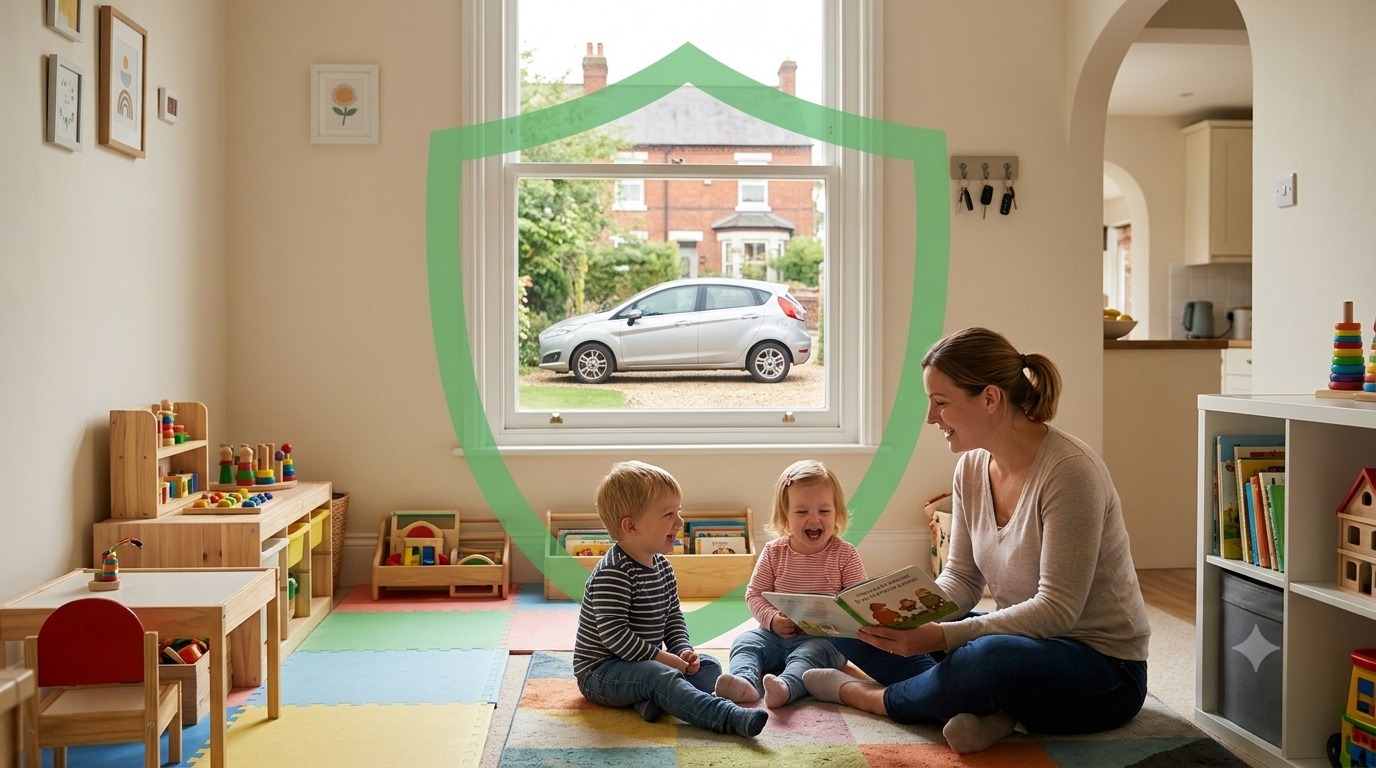
When setting up a home childcare business in the UK, your main focus is naturally on creating a safe, nurturing environment for young children. However, behind the playrooms and educational activities lies a legal foundation that every registered childminder must establish before opening their doors: insurance.
Navigating business insurance can feel overwhelming when you are starting out. Between statutory requirements set by Ofsted and the subtle differences in policy add-ons, it is vital to know exactly what cover you need to protect your income, your home and the children in your care.
This comprehensive guide details the mandatory legal requirements, optional policy extensions and common pitfalls regarding UK childminder insurance.
1. Public Liability Insurance: The Statutory Requirement
Under the Statutory Framework for the Early Years Foundation Stage (EYFS), public liability insurance is a non-negotiable legal requirement. You must have an active policy in place the moment your registration certificate is issued and you begin caring for children.
Public liability insurance protects your business against legal claims if a child, parent or visitor suffers an accidental injury or property damage while in your care. Because toddlers are naturally energetic and unpredictable, having robust cover provides essential financial protection.
How Much Public Liability Cover Do You Need?
Most specialist childcare insurers (such as Morton Michel, PACEY or AXA) provide standard public liability cover limits between £5 million and £10 million. While the national EYFS framework requires appropriate cover, many local authorities specify a minimum threshold of £10 million if you intend to deliver government-funded childcare places.
When selecting your provider, ensure your policy explicitly covers all standard childminding activities, including:
- Indoor and outdoor play equipment in your home.
- Outings to local parks, libraries and playgroups.
- Transporting children on foot or via public transport.
- Preparation of meals, snacks and drinks.
2. Business Car Insurance: Class 1 Cover for Transporting Children
If you plan to use your personal vehicle to transport childminded children to school drop-offs, outings or playgroups, your standard Social, Domestic and Pleasure motor policy is legally insufficient.
Under EYFS welfare requirements, any vehicle used to transport children must be adequately insured for business use. You must contact your motor insurer and add Class 1 Business Use to your policy.
What Does Class 1 Motor Insurance Cover?
Class 1 business cover extends your standard car insurance to include driving between multiple work locations and carrying passengers as part of your commercial business. Many mainstream car insurance companies will add Class 1 cover for childminding for a small administrative fee or even free of charge, but you must formally declare it. Operating without business cover invalidates your insurance in the event of an accident.
3. Home and Buildings Insurance: Protecting Your Property
Running a commercial business from your private home alters your risk profile in the eyes of domestic property insurers. Failing to inform your home building and contents insurer that you work as a childminder can invalidate your entire home policy.
Before welcoming your first mindee, write to your mortgage lender and home insurance provider to notify them of your business activities. Most standard insurers will make a note on your file without increasing your premium, provided you operate within statutory childminding ratios.
Consider adding Commercial Business Contents Cover to protect specialised childcare equipment, such as double buggies, high chairs, outdoor play structures and sensory toys, which may not be covered under standard domestic contents policies.
4. Employer’s Liability Insurance: Working with Assistants
If you choose to employ an assistant or partner with another practitioner, UK law requires you to hold Employer’s Liability Insurance with a minimum cover limit of £5 million.
This cover protects you if an employee or assistant suffers an injury or illness arising from their work in your setting. Whether your assistant is full-time, part-time or a casual volunteer, holding this cover is a legal obligation under the Employers’ Liability (Compulsory Insurance) Act 1969.
Managing additional staff alongside legal childminder ratios and compliance rules requires clear operational structures to keep everyone safe.
5. Essential Policy Add-Ons for Complete Protection
In addition to basic public liability and motor cover, reputable childcare insurance packages often include or offer optional extensions for comprehensive business protection:
- Professional Indemnity Insurance: Protects your business if a parent claims financial loss due to alleged professional negligence or incorrect advice.
- Legal Expenses Cover: Assists with legal representation costs during fee disputes, contractual disagreements or employment tribunals.
- Loss of Registration Cover: Provides financial compensation for lost revenue if your Ofsted registration is temporarily suspended following an unproven allegation.
Accurately budgeting for these annual premiums from day one is vital when evaluating your overall childminder start-up costs and profitability.
The Childminding Journey Made Simple: Your All-in-One EYFS Solution
If setting up your childminding business feels overwhelming, that is completely normal. Every practitioner feels this way at the beginning.
That is exactly why we created the Become a Registered Childminder in the UK: Step-by-Step Course.
Inside the course, you will get:
- Clear EYFS explanations: Easy, jargon-free guidance so you know what Ofsted requires.
- Real examples: Learn how successfully registered childminders set up their homes and passed inspection.
- Ready-made templates: Fully editable policies, contracts, risk assessments and planning sheets.
- Video walkthroughs: Step-by-step tutorials so you never feel lost or confused.
- Affordable investment: Everything for just £49 with lifetime access and no agency fees.
6. Scaling Up: Insurance for Childcare on Domestic Premises (CoDP)
When expanding your home business to work with multiple assistants or co-minders, your insurance requirements naturally evolve.
If your team expands to five or more adults working together on-site, you are required to transition your registration to Childcare on Domestic Premises (CoDP). From an insurance perspective, your setting is treated as a commercial group setting operating within a residential property.
In addition to higher public liability limits, a CoDP setting requires formal commercial contents cover, staff personal accident insurance and robust management systems. To ensure your documentation satisfies insurers and inspectors alike, using pre-vetted approved nursery policies and procedures provides complete institutional protection. If you are preparing to make this structural leap, our dedicated Open a Nursery from Home (CoDP) course guides you through every step of group risk management.
Not Ready to Enrol Yet? Get Your Free Childminder Startup Guide
We understand that becoming a childminder is a big decision, and you might need a little more clarity before investing.
Download our FREE Childminder Startup Checklist to get a head start on planning your business and preparing your home.
Inside, you will get:
- The 3 essential steps you can take today without spending a penny.
- A clear breakdown of initial costs to expect.
- A summary of required space, equipment and safety measures.
Summary Checklist: Securing Your Childminder Insurance
- [ ] Public Liability: Purchase cover (£5M–£10M limit) before your registration date.
- [ ] Car Insurance: Add Class 1 Business Use to your motor policy if driving mindees.
- [ ] Home Insurance: Formally notify your building and contents provider in writing.
- [ ] Employer’s Liability: Secure compulsory cover if hiring an assistant or volunteer.
- [ ] Documentation: Store digital and physical copies of all insurance certificates in your registration file for Ofsted inspection.