
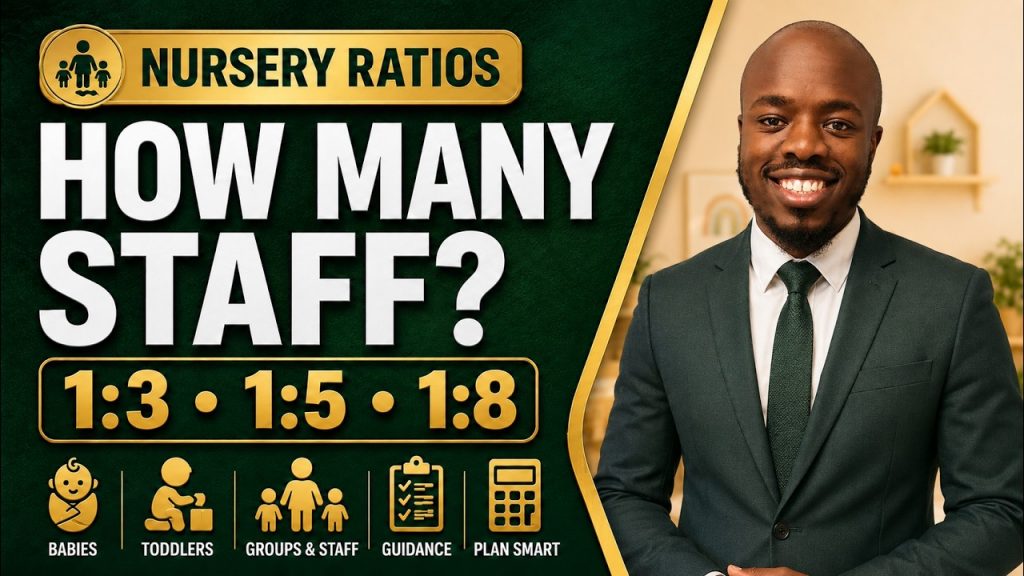
EYFS Nursery Staff Ratios Explained: How Many Staff Do You Really Need?
Calculating your required headcount is one of the most vital steps when mapping out a new early years business. Getting your staffing numbers wrong can instantly jeopardise child safety, lead to serious regulatory issues with Ofsted or decimate your financial margins. Many prospective providers look only at the basic legal numbers, failing to realise that operational reality requires a much more detailed approach.
In this guide, we break down the statutory framework governing early years provision in England, explore the hidden factors that influence your daily staffing schedule and look at how to build a highly optimized rota that keeps your business compliant and profitable.
The Statutory Foundations of EYFS Staff to Child Ratios
The Early Years Foundation Stage statutory framework sets out rigid legal parameters regarding the minimum number of qualified staff required to look after children of specific ages. These numbers are non negotiable legal minimums that must be maintained at all times during operating hours:
- Children under two years old: A strict minimum ratio of 1:3 applies. This means you must have at least one qualified practitioner for every three babies present in the building.
- Children aged two years old: The standard legal minimum ratio is 1:4. This structural rule applies to any child who has celebrated their second birthday but has not yet reached age three.
- Children aged three years and over: For pre school spaces, the standard layout ratio is 1:8 if the staff member does not hold a full degree status. If a staff member holds an approved early years degree or early years teacher status, this ratio can extend up to 1:13 for that specific group.
While memorising these tiers is straightforward, configuring a working nursery floor around them is far more complex. The legal ratios assume perfect conditions, but your daily operations are dynamic and unpredictable.
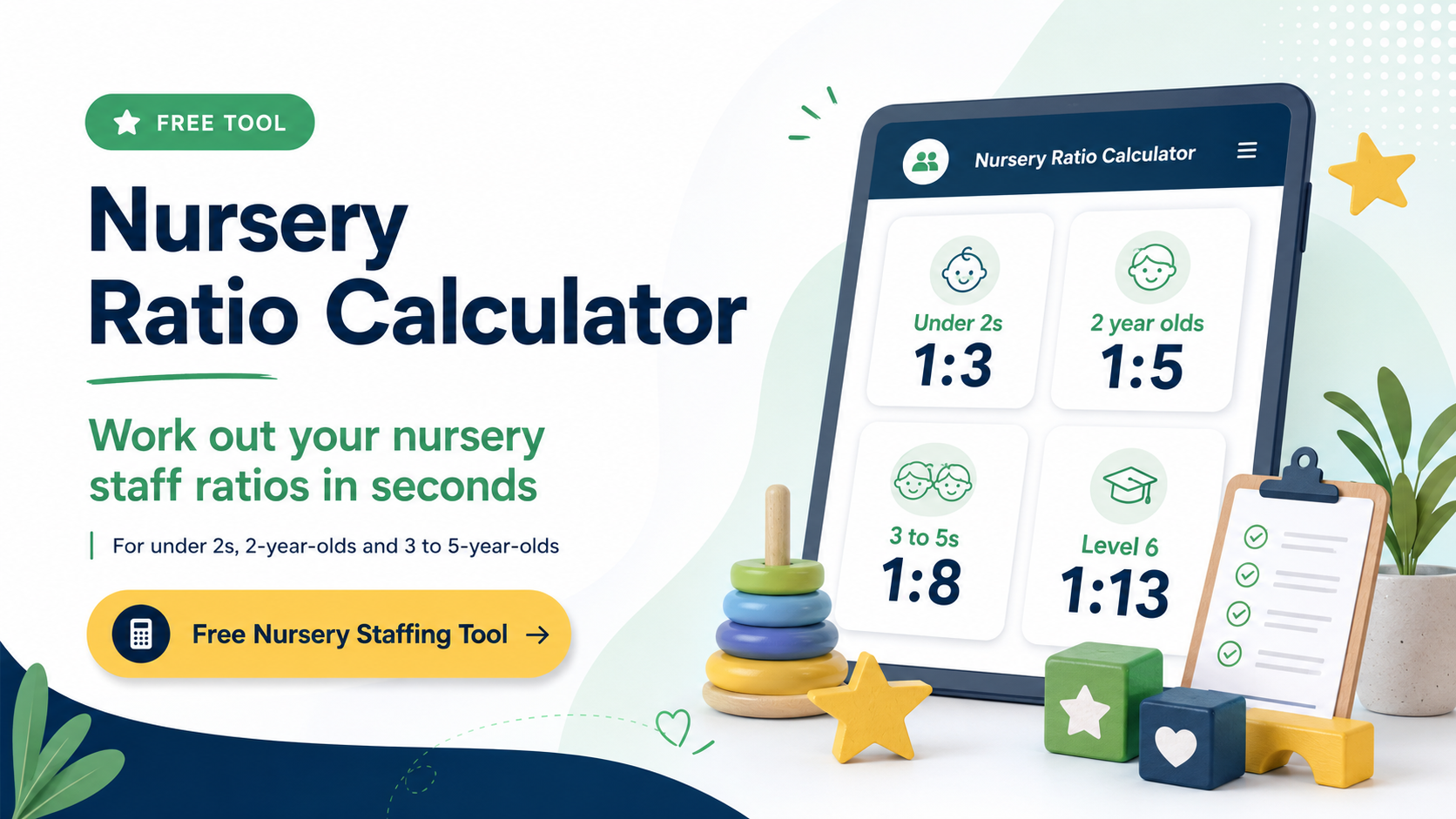
Calculate Your Staff Headcount Automatically
Do not rely on rough guesswork to build your nursery staffing plan. Use our professional, interactive tool to work out your legal minimum staff requirements across all age groups instantly.
Try the Free Ratio CalculatorThe Difference Between Legal Minimums and Financial Reality
The absolute biggest mistake new nursery entrepreneurs make is assuming that if they have twelve two year olds, they only need to hire three members of staff. On paper, three staff members satisfy the 1:4 framework perfectly. In reality, relying strictly on that mathematical minimum will cause your nursery operations to fail within the very first week.
To run a compliant facility, you must plan your staffing schedule around human patterns and unexpected operational strains:
1. Lunch Breaks and Shift Rotations
Your team members cannot work ten hours straight without a break. The moment a practitioner leaves the room for a lunch break or a rest period, your remaining team members are instantly out of ratio. You must have floaters or cover staff available to step into those zones seamlessly throughout the day.
2. Building Layout and Blind Spots
The physical structure of your nursery building heavily influences your staffing requirements. If your baby room is split into two distinct sections or features an awkward L-shaped layout, two practitioners might struggle to maintain visual supervision of all children simultaneously. Ofsted expects staff to be deployed dynamically to ensure child safety, which often means adding an extra body to counter layout limitations.
3. Sickness, Holidays and Training Cover
Staff sickness is an inevitability in the childcare sector. If a staff member calls in sick at seven in the morning and you do not have built in redundancy or a reliable bank staff framework, you will be forced to turn children away at the door to remain within legal ratios. This breaks trust with parents and destroys your revenue.

Launch Your Own Nursery in Just 6 Months
Skip the stressful guesswork and expensive startup mistakes. Learn how to secure properties, master Ofsted registration, manage staff ratios and build a highly profitable early years business on a budget.
Explore the Launch TrainingQualification Requirements: Who Counts in Your Ratios?
You cannot simply bring in uncertified assistants or volunteers to satisfy your regulatory requirements. The EYFS sets strict rules regarding the educational qualifications your team must hold to be legally counted inside a ratio format. The nursery manager must be qualified to at least a full and relevant Level 3 standard, and at least half of all other required practitioners must hold a full and relevant Level 2 qualification.
Furthermore, any staff member counting towards your baby ratios must have specific training covering the care of infants. Failing to map out the qualification levels of your team alongside your child registration numbers can lead to an immediate failure during an unannounced Ofsted inspection.
Strategic Advice for New Providers
To keep your payroll costs under control while staying perfectly compliant, build a tiered staffing buffer. Establish a core team of full time qualified professionals who form the stable backbone of your daily rooms. Supplement this core group with part time practitioners on flexible contracts aligned with peak drop off and pick up times, and build a local pool of reliable zero hours bank staff who can step in at short notice to cover emergency sickness.

Need Help Structuring Your Nursery Staffing Plan?
Hi, I am Curtly Ania. I support prospective nursery owners across the UK to navigate complex compliance metrics, property searches and financial projections without expensive mistakes.
Book a 1-to-1 Strategy ConsultationNever miss a YouTube video breakdown
Subscribe to get the official companion articles, full written breakdowns and structural summaries from my latest YouTube videos delivered directly to your inbox as soon as they drop.
Join the video blog list
Enter your details below to receive the exclusive written guides, notes and compliance documentation that go alongside my channel uploads.