
Childcare Interview Questions and Answers: How to Pass a Nursery Interview
Preparing for a childcare or nursery practitioner interview requires much more than simply stating that you love children. While warmth and a passion for working with youngsters are essential foundations, nursery owners and managers evaluate candidates against rigorous professional competencies.
Interviewers need to know whether you can keep children safe, follow the Early Years Foundation Stage framework, manage behaviour calmly, communicate effectively with parents, and operate seamlessly as part of a busy team. This comprehensive guide breaks down the most common nursery interview questions and provides professional model answers to help you articulate your skills with complete confidence.
What Interviewers Are Really Looking For
When nursery managers sit across from a candidate, they are looking beyond surface-level friendliness. They want to see a clear understanding of daily realities—including safeguarding, statutory ratios, personal care, observations, and teamwork. Knowing how to explain your professional thinking clearly is what separates an average applicant from an exceptional hire.
Common Nursery Interview Questions and Model Answers
1. Tell me about yourself.
Strong Answer: “I have always enjoyed working with children and supporting their early learning, development, and wellbeing. I am patient, reliable, and thrive in a collaborative team environment. I understand that working in a nursery involves much more than play—it requires strict adherence to safeguarding procedures, routine management, developmental observation, and strong partnerships with parents. I am looking forward to bringing these values to your setting.”
2. Why do you want to work in childcare?
Strong Answer: “The early years are the most critical foundation in a child’s life. Children rapidly develop communication, confidence, and independence during this stage, and I love being a positive influence. Whether I am helping a child settle in the morning, encouraging their language skills, or helping them navigate complex emotions, I find deep professional fulfilment in supporting their growth.”
3. What does good quality childcare look like?
Strong Answer: “Good quality childcare means children are kept safe, nurtured, and actively supported to learn and explore. The environment should feel warm, structured, and organised. Practitioners should know individual children deeply, maintain open communication with families, and strictly follow the EYFS framework, safeguarding policies, and health and safety standards.”
4. What do you know about the EYFS?
Strong Answer: “The Early Years Foundation Stage sets the statutory standards for learning, development, and care for children from birth to five. It covers safeguarding, welfare, staff ratios, and parent partnerships, while structuring learning around the seven areas—with a particular focus on the three prime areas: communication and language, physical development, and personal, social, and emotional development.”
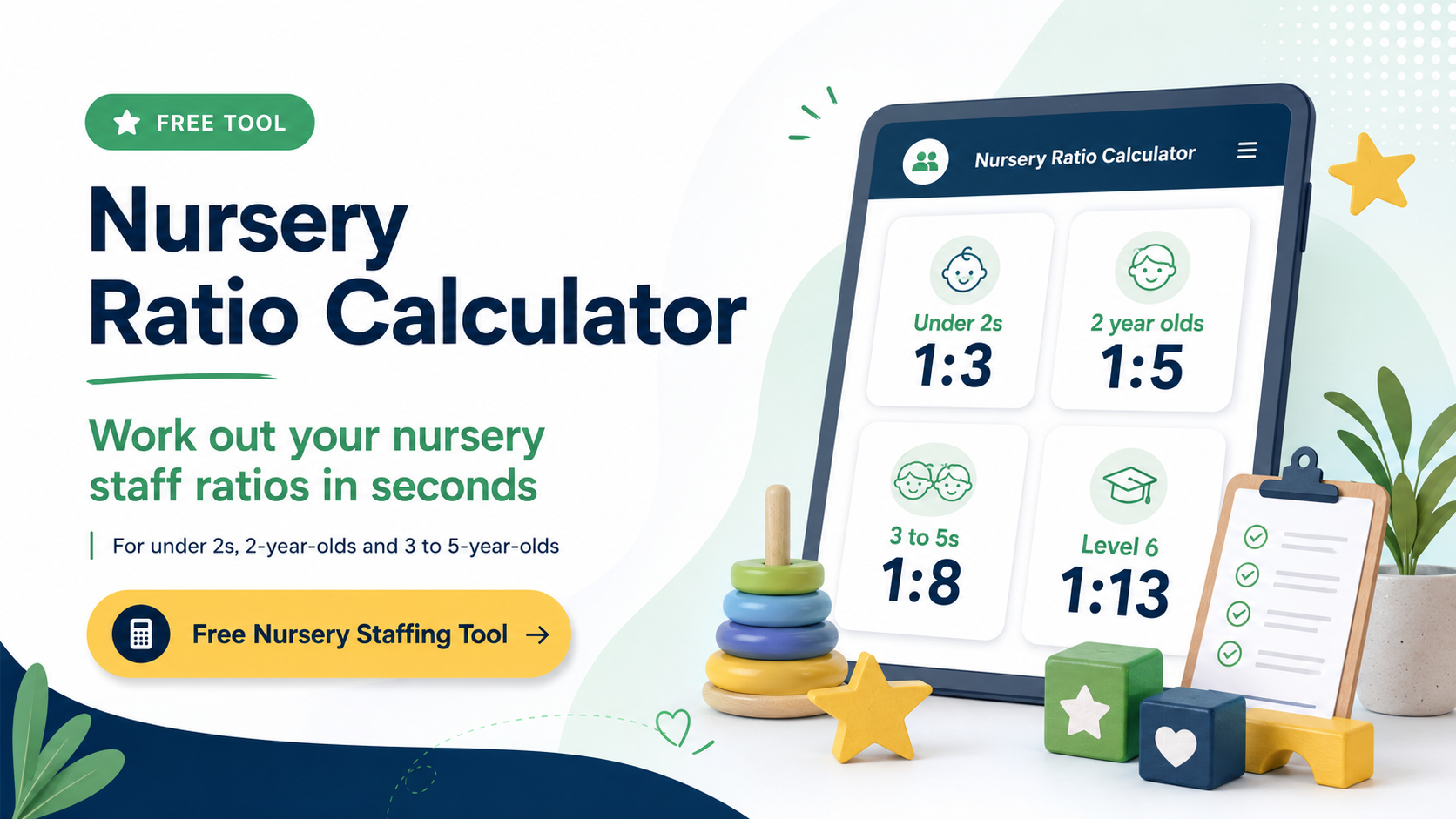
Understand Legal Ratios and Staffing Requirements
Compliance with EYFS staff-to-child ratios is a core interview topic. Use our interactive ratio calculator to explore how staffing models work across different age groups.
Try the Free Ratio Calculator5. What is the role of a key person?
Strong Answer: “A key person builds a close, secure attachment with specific children, helping them feel settled and confident in the nursery environment. They track developmental progress, understand individual routines, and maintain regular communication with parents to ensure seamless consistency between home and the setting.”
6. How would you handle challenging behaviour?
Strong Answer: “I always stay calm and look for the root cause behind the behaviour—whether it is tiredness, hunger, frustration, or a change in routine. I use clear, positive, age-appropriate language, set firm and kind boundaries, and follow the nursery’s behaviour policy while consulting senior staff or the SENCO if patterns persist.”
7. How do you work effectively as part of a team?
Strong Answer: “Teamwork in a nursery relies on transparent communication and absolute reliability. Because rooms move quickly, keeping colleagues informed about handovers, nappy changes, or parent messages is vital. Good team members support one another during peak times and accept feedback constructively to maintain high standards.”
8. What would you do if you made a mistake?
Strong Answer: “If I made an error, I would take immediate responsibility and inform the room leader or manager straight away without attempting to hide it. In childcare, transparency is vital for child safety and regulatory compliance. Being open allows the team to resolve issues quickly and learn from them.”

Launch Your Nursery in Just 6 Months
Are you an experienced practitioner looking to open your own nursery? Master the entire business startup journey, regulatory compliance, and Ofsted preparation with our expert guidance.
Explore the Launch TrainingAdvice for Nursery Owners and Managers
If you are hiring for your own setting, remember that recruitment shapes your entire safeguarding culture and business reputation. Do not rely solely on past experience listed on a CV. Use scenario-based questions to test how candidates think on their feet, prioritize child safety, and handle pressure.

Need Support With Staff Recruitment and Training?
Hi, I am Curtly Ania. I work with UK nursery owners to establish bulletproof safeguarding frameworks, recruitment strategies, and high-performing early years teams.
Book a 1-to-1 Strategy ConsultationNever miss a YouTube video breakdown
Subscribe to get the official companion articles, full written breakdowns and structural summaries from my latest YouTube videos delivered directly to your inbox as soon as they drop.
Join the video blog list
Enter your details below to receive the exclusive written guides, notes and compliance documentation that go alongside my channel uploads.