
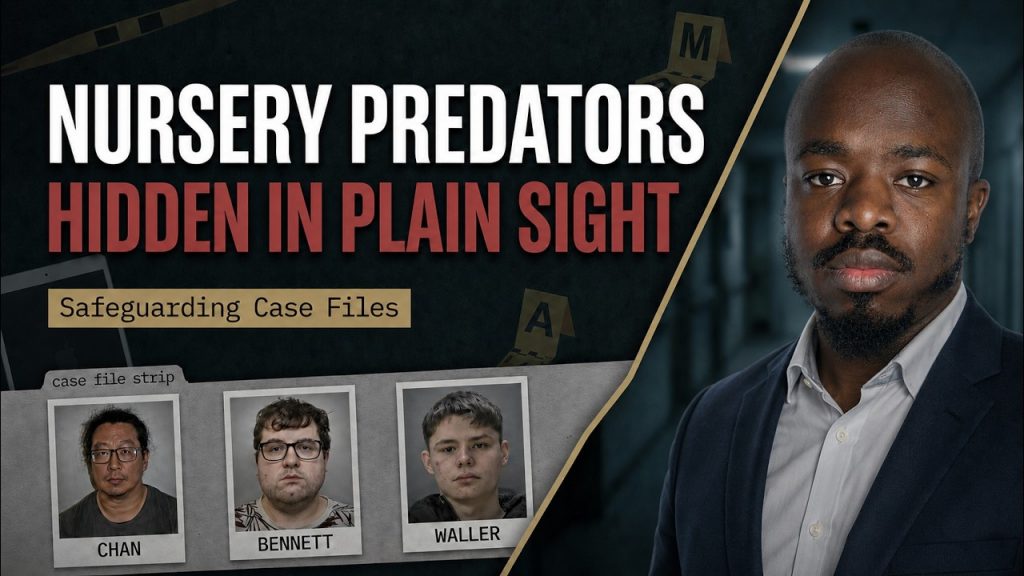
Systemic Safeguarding Failures: The Chan, Bennett and Waller Cases
Childcare professionals enter their settings every day with a core mission to keep children safe. We trust our colleagues, rely on established policies and believe our training creates a secure environment. Between 2024 and 2026, the early years sector faced severe challenges. Cases involving Vincent Chan, Nathan Bennett and Thomas Waller demonstrated how perpetrators can exploit routines, lone working moments and workplace technology to hide their actions in broad daylight.
To prevent future incidents, practitioners must rely on professional curiosity. We need to understand the digital blind spots and institutional grooming tactics used to manipulate entire staff teams. This forensic breakdown explores exactly what went wrong in these cases, what went right and why you are the most critical line of defence in the history of British safeguarding.
A Forensic Analysis of Three Major Safeguarding Cases
The investigations into Chan, Bennett and Waller revealed chilling blueprints of how early years settings can be infiltrated. By reviewing the specific tactics used by each offender, childcare practitioners can better understand what red flags look like in a real-world environment and how seemingly minor details can form part of a much larger picture of abuse.
Vincent Chan: The Digital Predator
Vincent Chan was a 45-year-old Room Leader who exploited technology to hide his crimes over a 17-year period across multiple settings. During his time at Bright Horizons, he used nursery-issued iPads to film himself assaulting children. He deliberately timed his actions during naptime while situated in rooms with windows and glass-partitioned doors. His strategy relied entirely on a digital blind spot. He knew that colleagues and passing staff naturally assume a practitioner holding a nursery device is simply completing observations or updating parent portals.
His predatory behaviour extended far beyond the nursery floor. Police eventually found 16 nursery devices at his home that should never have left the site. He used sophisticated AI software to superimpose the faces of his victims onto indecent images. This digital trail of horror was so complex that it took cybercrime teams 14 months to fully crack. He operated not just as a physical threat but as a calculated digital architect of abuse.
For months leading up to his arrest, vital red flags were missed. Parents had reported low-level concerns including unexplained injuries, bite marks and a disturbing psychological switch in their children. Toddlers who were once confident became severely anxious and clingy the moment they reached the nursery door. The breakthrough finally came in May 2024 when Chan showed a video of a distressed child to a coworker expecting her to find it amusing. Instead of laughing, the colleague acted on her training and reported him immediately for child cruelty. Chan was sentenced to 18 years in custody in February 2026.
Nathan Bennett: Institutional Grooming
Operating in Bristol, 30-year-old Nathan Bennett demonstrated a different but equally dangerous strategy known as institutional grooming. He did not simply target vulnerable children; he targeted the entire environment. Bennett actively manipulated the staff team and management structure to ensure his boundary-blurring behaviour went unchallenged. By cultivating an image of a dedicated and helpful colleague, he created an atmosphere where red flags were written off as harmless quirks.
His tactics were highly visible yet systemically ignored. He sat children on his lap for lengthy periods and displayed territorial behaviour by attempting to isolate specific toddlers from other caregivers. To excuse his lack of professional boundaries, he falsely claimed to have autism. In one of the most alarming details of the case, he was even allowed to continue working while wearing trousers with holes in the crotch area. Parents frequently raised specific complaints about him being left alone with toddlers during busy handover periods but management failed to escalate these early warnings.
The situation only ended when nursery manager Victoria Tutton decided to take decisive action following a specific staff concern. She immediately sat down to review the internal CCTV footage. Upon witnessing Bennett acting inappropriately on camera, she sent him home that very afternoon. The police subsequently reviewed footage from all 18 cameras and uncovered hundreds of hours of abuse against five different boys. Bennett was handed a 30-year sentence in March 2026.
Thomas Waller: The Skeleton Key
Unlike Chan and Bennett who spent months or years building false reputations, 18-year-old Thomas Waller used his newly acquired qualifications as a skeleton key to gain rapid access to children. He secured a summer job at a private nursery in Surrey in August 2024. Presenting himself as a young, enthusiastic Level 3 practitioner, he appeared to be the perfect hire. However, his intentions were entirely premeditated and his escalation was terrifyingly fast.
Within just two weeks of starting his position, Waller began a concentrated campaign of abuse against two three-year-old boys. To facilitate this, he specifically volunteered for the duties that most staff view as routine chores such as toileting and changing nappies. Waller recognised that these tasks provided him with crucial pockets of isolation. Behind closed bathroom doors, he committed severe acts of abuse in the brief time it took to complete a standard care task.
Waller was ultimately stopped by a combination of parental instinct and rapid institutional response. A child disclosed the abuse to his mother who immediately informed the nursery. Rather than conducting a lengthy internal review, the nursery contacted the police without a single moment of delay. This same-day action allowed forensic teams to secure vital DNA evidence from the victim’s clothing. Despite refusing to speak during police interviews, this forensic smoking gun secured a 15-year sentence for Waller in November 2025.

Safeguarding Level 2: The Forensic Standard
The early years sector is evolving. Mandatory reporting of child sexual abuse is no longer just best practice; it is a statutory duty. It is now a criminal offence to obstruct a report. The bar for safeguarding has never been higher and the responsibility has never been clearer.
We do not expect you to be a detective but we do expect you to be a guardian. To support your practice, we have integrated the forensic lessons from these high-profile investigations into our new Level 2 Safeguarding Training Course. This course is designed for practitioners like you to help you spot institutional grooming, close digital blind spots and ensure pockets of isolation are eliminated forever.
This is not just about compliance; it is about confidence. It is about knowing exactly what to do when your gut tells you something is wrong. It is about making sure your nursery is a place where children thrive and predators have nowhere to hide. Plus, as you have watched this video you can get 20% off the course price using discount code SafeYotube.
If you are feeling like you want a deeper level of confidence or if you need to formalise your training for professional requirements, enrol on the Level 2 Safeguarding course. Unlike a standard checklist, this course is designed to:
- Build Clinical Confidence: Walk through complex, real-world scenarios so you know exactly what to say and do.
- Navigate Legal Frameworks: Understand your local reporting obligations without the legal jargon.
- Empower Your Voice: Learn how to advocate for those who may not be able to advocate for themselves.
Your Role as a Guardian of Care
Understanding the theory is a vital first step but putting it into practice is where the real impact happens. Safeguarding is not just a set of rules; it is a culture of alertness, empathy and immediate action. As you move forward from this session, remember that your intuition is one of your most valuable tools. If something feels wrong, it usually is. Your role is not to solve every problem alone but to be the bridge between a person in need and the support they deserve.
Safeguarding work can be emotionally taxing. Whether you choose to join the course or simply continue learning through your own practice, please remember to look after your own wellbeing. You cannot pour from an empty cup and your mental health is just as important as the safety of those you care for. Thank you for the work you do. By staying informed, you are already making the world a safer place for the most vulnerable among us.
Never miss a YouTube video breakdown
Subscribe to get the official companion articles, full written breakdowns and structural summaries from my latest YouTube videos delivered directly to your inbox as soon as they drop.
Join the video blog list
Enter your details below to receive the exclusive written guides, notes and compliance documentation that go alongside my channel uploads.