

Up to 5 Days Notice
Morning call before 10am~3 Hours On-Site
Focused, practical visit5-Point Evaluation
No single overall gradeEvery 4 Years
18 months if newly registeredMentioning the word “Ofsted” to a home childminder often brings an immediate spike in anxiety. However, inspection day does not need to be a stressful ordeal. When you understand what inspectors look for and how the evaluation process works, you can turn your inspection into an opportunity to showcase your daily practice.
1. The Ofsted Framework: What You Need to Know
Ofsted evaluates registered early years settings using a modern narrative report card system rather than issuing a single overall grade. This framework reduces unnecessary pressure on providers while offering parents clearer insights into specific areas of care.
The 5 Evaluation Areas & Grading Scale
Your report card assesses practice across distinct categories on a 5-point scale (Exceptional, Strong Standard, Expected Standard, Needs Attention, Urgent Improvement):
Note: Safeguarding remains a critical compliance check that must meet statutory requirements.
To prepare your setting effectively, take time to review our dedicated EYFS guide for childminders to ensure your daily routines align with current learning goals.
2. Phase 1: The Call & Planning Call
For childminders, Ofsted provides a brief advance notice period to ensure children are present on the day of the visit.
Initial Notification Call (Before 10am)
The inspector calls up to 5 working days prior to confirm you are operating, check which children are present and arrange a convenient time for the planning call.
The 30-Minute Planning Call
A telephone discussion where you explain your setting’s context, curriculum approach and inclusion arrangements before the inspector steps through your door.
Inspectors no longer conduct formal “learning walks” upon arrival. Instead, the details discussed during your planning call set the foundation for the visit, followed directly by shared observations in your playroom.
3. Phase 2: Inspection Day & Shared Observations
When the inspector arrives, their primary goal is observing interaction, engagement and progress in your home environment. An inspection typically lasts around 3 hours.
What Inspectors Focus On During Observations
- Communication and Language: How you talk with toddlers, read books, introduce new vocabulary and respond to babbling or speech.
- Inclusion in Practice: How you adapt activities for children with special educational needs or disabilities (SEND) and support children from diverse or disadvantaged backgrounds.
- Child Independence and Routines: Encouraging children to wash hands, put on shoes, clear away toys and make independent choices.
- Shared Discussions: Talking alongside the inspector about why you planned a specific activity and what skills the child is learning.
Maintaining clear operational standards and managing child numbers is essential. Check our guide on childminder ratios and compliance rules to ensure your setting remains compliant throughout the day.
The Childminding Journey Made Simple: Your All-in-One EYFS Solution
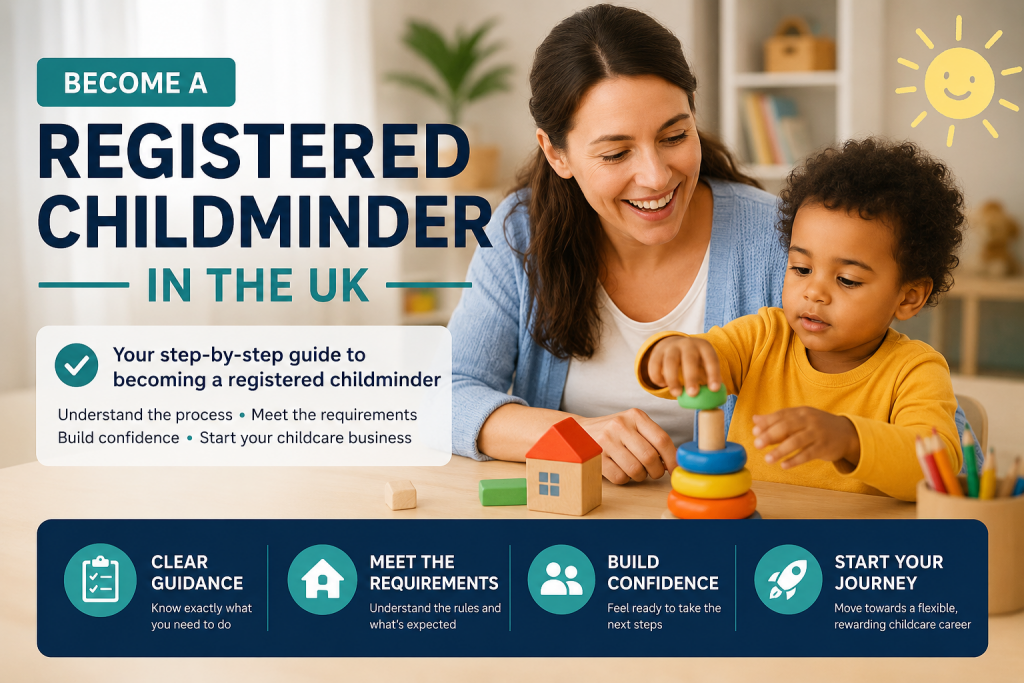
If setting up your childminding business feels overwhelming, that is completely normal. Every practitioner feels this way at the beginning.
That is exactly why we created the Become a Registered Childminder in the UK: Step-by-Step Course.
Inside the course, you will get:
- Clear EYFS explanations: Easy, jargon-free guidance so you know what Ofsted requires.
- Real examples: Learn how successfully registered childminders set up their homes and passed inspection.
- Ready-made templates: Fully editable policies, contracts, risk assessments and planning sheets.
- Video walkthroughs: Step-by-step tutorials so you never feel lost or confused.
- Affordable investment: Everything for just £49 with lifetime access and no agency fees.
4. Phase 3: Paperwork, Case Sampling & Safeguarding
Ofsted does not require mountains of paperwork. Inspectors want to see concise, accessible records confirming that children are safe and properly cared for.
Safeguarding & Health Records
- Valid Paediatric First Aid certificate
- DBS checks for all adults over 16 in the home
- Safeguarding policy & local referral paths
- Accident, injury & medication logs
Child & Operational Records
- Daily attendance registers with exact times
- Parental consent forms & emergency contacts
- Public liability insurance certificate
- Case sampling notes for SEND or EYPP mindees
Understanding these requirements from the start helps you avoid unexpected setup costs. Read our breakdown on childminder start-up costs and budgeting for a complete list of required equipment and paperwork tools.
5. What Happens After the Inspection?
At the end of the 3-hour visit, the inspector will invite you to a brief feedback meeting. They will summarize their findings across the 5 evaluation areas and share your provisional outcomes.
The Report Card Timeline
- Within 18 Working Days: You receive your draft report card electronically.
- 5 Working Days Window: You review the draft for factual accuracy and submit any corrections.
- Within 30 Working Days: Your final report card is published online and shared with parents.
6. Scaling Your Practice: Expanding Beyond Home Care
If your childminding service expands to include assistants, co-minders or team operations, inspection requirements scale alongside your setting.
When working with five or more adults operating together on residential premises, your service shifts to Childcare on Domestic Premises (CoDP). This setting model combines home childcare with group nursery regulations.
To ensure your group setting meets strict standards, implement pre-vetted approved nursery policies and procedures across your team. If you are preparing for this transition, our specialist Open a Nursery from Home (CoDP) course guides you through managing inspections and staff leadership.
Not Ready to Enrol Yet? Get Your Free Childminder Startup Guide
We understand that becoming a childminder is a big decision, and you might need a little more clarity before investing.
Download our FREE Childminder Startup Checklist to get a head start on planning your business and preparing your home.
Inside, you will get:
- The 3 essential steps you can take today without spending a penny.
- A clear breakdown of initial costs to expect.
- A summary of required space, equipment and safety measures.