
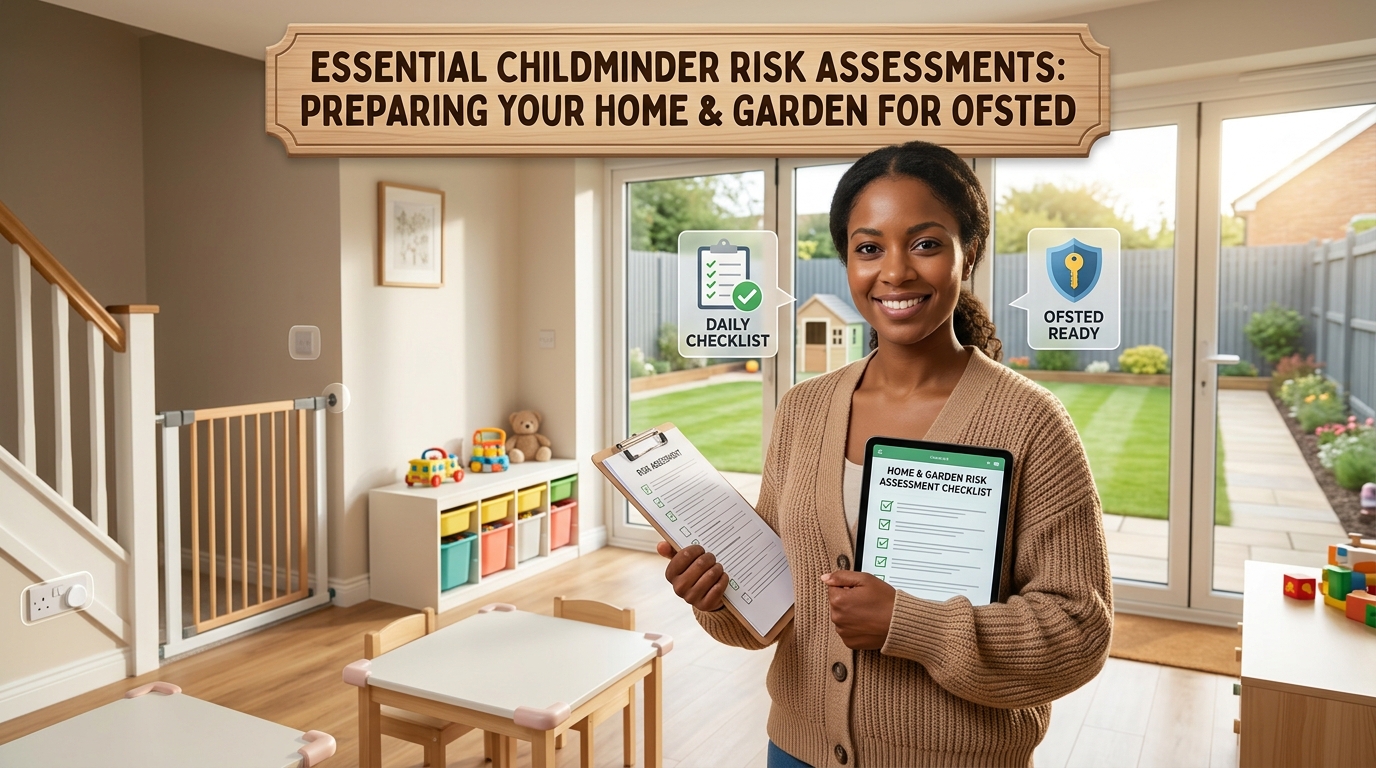
Preparing your home and garden for an Ofsted inspection or pre-registration visit can feel daunting. New childminders often worry that they will need to transform their family home into a fortress of plastic barriers or fill out endless binder pages of risk paperwork. Fortunately, Ofsted’s approach to risk assessment is far more practical than most practitioners think.
Under the statutory framework for the Early Years Foundation Stage (EYFS), childminders must take reasonable steps to ensure that children in their care are kept safe and healthy. This guide breaks down exactly what Ofsted expects, how to perform room-by-room risk assessments, how to secure your outdoor spaces, and how to maintain effective daily safety routines.
1. What Ofsted Actually Expects: Paperwork vs. Real-World Practice
A common misconception is that childminders must write a lengthy risk assessment for every single toy or activity. The EYFS states clearly that risk assessments do not all need to be written down, provided you can demonstrate to an inspector that you continuously identify and manage hazards effectively.
- Identify the Hazard: What could reasonably cause harm to a child in your environment?
- Assess the Risk Level: How likely is it that a child could be injured, and how severe could it be?
- Put Control Measures in Place: What action have you taken to remove, minimize, or supervise the hazard?
While written documents are not mandatory for every minor hazard, having written risk assessments for your core spaces (indoor areas, garden, and regular outings) proves to Ofsted that you have a structured, proactive approach to child safety.
2. Indoor Risk Assessment: Room-by-Room Checklist
Before welcoming mindees into your home, systematically assess each accessible area. Here are the key hazards inspectors look for during registration and routine inspections:
Hallways & Entrances
- Stair gates fitted securely at top/bottom of stairs.
- Front door locks accessible to adults but out of children’s reach.
- Trip hazards removed (shoes, bags, loose mats).
Playroom & Living Areas
Check for blind cords (must be fitted with safety cleats), heavy furniture anchored to walls, covered electrical sockets where appropriate, and soft corner guards on low glass tables.
Kitchen & Dining Space
Cleaning chemicals, bleach, and dishwasher tablets locked in cupboards or stored high up. Hot drinks kept completely off worktops when children are present. Sharp knives and utensils secured.
Sleep & Bathroom Areas
Cots positioned away from windows and blind cords. Baby monitor cables tucked safely out of reach. Bathroom water temperature checked to prevent scalding; toiletries and medicines locked away.
3. Garden & Outdoor Safety
Outdoor play is an essential part of early education, but gardens present unique hazards that require careful control measures.
- Secure Boundaries: Ensure perimeter fences and garden gates are sturdy, child-proof, and locked to prevent children from wandering onto roads.
- Water Features & Ponds: Ponds must be fully covered with rigid metal grates or securely fenced off. Water butts must have locked, child-proof lids.
- Harmful Plants & Fungi: Check for toxic garden plants (e.g., foxgloves, laburnum, yew) and inspect lawns daily for wild mushrooms or animal faeces.
- Play Equipment Integrity: Check outdoor wooden climbing frames, playhouses, and trampolines for rust, splintering, loose bolts, or wet, slippery surfaces.
Inspectors will check outdoor sheds and garages if children have access to the garden. Ensure garden sheds containing weedkiller, lawnmowers, sharp gardening tools, or paint tins are fitted with heavy-duty padlocks or kept inaccessible.
Free Download: Home & Garden Risk Assessment Template
Download our customizable, ready-to-print risk assessment template designed specifically for UK childminders preparing for Ofsted pre-registration and ongoing compliance.
4. Outings & Transport Risk Assessments
Taking children on local outings—such as trips to the park, toddler groups, or libraries—is an essential part of early learning. Outings require dynamic risk planning:
Walking Outings
Assess road crossing points, busy pavements, and weather conditions. Ensure high-visibility reins or wrist straps are used where appropriate and check mobile phones are fully charged.
Car Transport
Verify that child seats comply with current UK safety laws, seatbelts are properly fitted, and your vehicle is covered by business use under your childminder insurance policy.
Always maintain proper childminder staff-to-child ratio limits on outings, carry a fully equipped emergency travel bag, and keep written emergency contact cards for every child in care.
5. Developing a 5-Minute Daily Safety Scan Routine
A written risk assessment is only as good as your daily habits. Successful childminders build a quick 5-minute morning scan into their start-of-day routine before mindees arrive:
- Scan floors and play mats for small choking hazards left by older family members.
- Inspect garden grass for animal waste, broken glass, or fallen branches.
- Test stair gates, door latches, and fire alarms.
- Verify first aid kits are fully stocked and accessible to adults only.
- Record any temporary hazards (e.g., ongoing building repairs) in your daily business diary.
The Childminding Journey Made Simple: Your All-in-One EYFS Solution

Preparing your home, completing paperwork, and registering with Ofsted can feel overwhelming when doing it alone.
Our comprehensive Become a Registered Childminder in the UK: Step-by-Step Course gives you all the tools, templates, and guidance you need to set up with total confidence.
What’s included inside:
- Clear EYFS walkthroughs: Simple, jargon-free explanations of statutory safety duties.
- Ready-to-use templates: Downloadable risk assessments, statutory policies, and contracts.
- Inspection readiness: Learn exactly what Ofsted inspectors look for on registration day.
- Affordable investment: Full step-by-step training for just £49 with lifetime access.
6. Linking Safety Rules to Your Official Policies
Risk assessments work hand in hand with your published business policies. Ensure your risk management procedures align with your safeguard protocols, emergency procedures, and health and safety document sets.
If you need off-the-shelf, Ofsted-tested policies that cover safeguarding, accident recording, risk assessments, and medication administration, explore our pre-written approved nursery policies and procedures documentation package.
Stay Updated on Early Years Safety & Ofsted Standards
Subscribe to our regular newsletter for UK childminders and nursery owners. Get practical guidance on EYFS updates, risk management templates, and business tips delivered straight to your inbox.